Do search

Archive for the ‘Gardening’ Category

Inspiring garden centers and outdoor living retailers

Wednesday, August 25th, 2010

This was my first visit to the IGC Show in Chicago - the 4th Annual Show was impressive

I had a great gathering of "indie" retailers for this presentation.

After presenting to a welcoming audience at last week’s Independent Garden Center Show in Chicago, I’m more convinced than ever that there is a huge passion and vitality among the “indies” of horticulture. 

These are the women and men who adore plants, love to share their knowledge about growing things, don’t mind getting dirt under their nails, and who understand that connecting with other gardeners is what it’s all about. 

If you can run a business like that, well, then you are blessed. I’m not saying it’s easy. These are hard-working plantswomen and men; some of them are from longtime nursery families who grew up growing and selling plants. Others come to garden center life through different paths. But people find their way. And in the face of competition from big box retailers, the “indies” are almost as threatened as small-town booksellers (Although I just read an article in New York magazine about the return of independent book stores.) From what I saw last week, with the aisles of Chicago’s Navy Pier teeming with thousands of trade showgoers, I’m convinced the “indie” garden center and outdoor living retailer is a force to be reckoned with. 

My talk highlighted some of the successful participants in this movement. I promised to post an excerpt of this talk and some highlights here for my audience members to read. I”m also interested in comments and suggestions for other “indies” who are doing things right in their own community. Please let me know where you gain inspiration and make a “connection” with the local garden center in your community. I really do want to know! 

INSPIRING GARDEN CENTERS AND OUTDOOR LIVING RETAILERS are . . .  (more…)

Related posts

A meadow in a vase

Saturday, August 21st, 2010

The September issue of Better Homes & Gardens features my “Debra’s Garden” column encouraging readers to add ornamental grasses to their seasonal flower arrangements.  

"Meadow in a vase" is the theme of my September column for BH&G

The photo that accompanies the piece depicts a gorgeous autumn bouquet bursting with asters, fall foliage and miscanthus blades.  

Its sultry palette includes dark purple, russet-red, gold and green elements in a clear, glass vase. As a footnote, I promised to show off my favorite grasses for cutting and flower arranging here on this blog.  

As it turns out, I’ve been seeing a lot of wonderful ornamental grasses and grass-like design ingredients lately. These days, I have dreamy plumes of fountain, feather, and silver grasses on my mind.  

There’s something both completely romantic and purely modern about grasses in floral arrangements (or in the landscape, for that matter). Here’s a peek at what’s caught my eye this year, including my favorite grasses for cutting:  

FROM THE FLOWER FARM  

Owned by Diane Szukovathy and Dennis Westphall, Jello Mold Farm is one of my favorite local flower sources here in the Pacific Northwest. Diane and Dennis use sustainable practices and recently they’ve delighted floral design customers with gorgeous late-summer grasses. You can find Jello Mold Farm at the Queen Anne Farmers’ Market every Thursday - be sure to check out the incredible selection of downy and fluid grasses.  

Here are a few show-stoppers included on Diane’s “fresh list” that she emails to customers every Monday. The four images you see here were taken by Diane: 

Jello Mold's RED JEWEL MILLET, with large, elegant, arching, red-toned seed-heads approximately 5 inches long

Jello Mold's GREEN MILLET, with 3-inch-long, fuzzy green seedheads and a wonderful texture

These awesome examples are ornamental millets, not edible ones. 

While actually cultivars of Pennisetum glaucum, you can almost convince yourself that they are relatives of the corn family if you squint. 

When cut for bouquets, the plants yield both the sweet, furry seed-heads, as well as the strapping, wide leaf blades. Both plant elements are useful in an arrangement as beautiful counterpoints to blooms. 

Like many good things, “more is better.” For example,  I like to gather several seed-heads together in a clump and inset them into the arrangement. 

It’s a pretty picture to have three to five seed-heads cascading out of a bountiful grouping of seasonal flowers and foliage.  (more…)

Related posts

A true blue garden with a heart of gold

Sunday, August 8th, 2010

Tina sure knows how to enjoy herself in the garden! Here she is, resting on my vintage wicker in my former Seattle garden, 2006.

Great container design paired with whimsical glass art makes this pot a stunning focal point in Tina and Paul's garden.

I first met Tina Dixon in the early 2000′s when I was asked to join her as a judge for the Washington State Nursery & Landscape Association design awards.

Her bubbly personality and welcoming nature included me in the circle of other judges, most of whom had previously served together. Our judging session took place at her home in Bothell, just north of Seattle, allowing me to gain a better sense of just who Tina is. In short, Tina is a connector. She connects colleagues, clients and friends, helping everyone feel part of the Seattle horticultural community. You can’t help but have fun when she’s in the room (or on the tour bus or in the garden).

Through Plants a la Cart, her container design business, Tina creates breathtakingly gorgeous planted pots for some of the Seattle area’s poshest addresses.

Several years ago, she turned her attention to the property she owns with her husband Paul Stredwick. Their hand-crafted garden is a vibrant, color-infused, texture-layered, art-filled spot on the map. And garden tour-goers, if they are lucky, can occasionally get beyond the denim blue-stained gate to see the surprising horticultural world inside.

The photographs shared here are ones I took in 2006 when Tina and Paul opened their Golden Trowel Award-winning garden to the Hardy Plant Study Weekend participants. I served on the event’s planning committee that year, so I knew what a treat was in store for the several hundred participants who flocked there during the Open Garden schedule.

In 2007, Garden Design magazine awarded Tina and landscape designer Mike Jeppesen the Golden Trowel Award for this gorgeous Blue-Themed landscape

Since then, I know that Tina and Paul have received numerous requests to add their garden to area tours. They recently decided to open the property to benefit a cause that they personally support, Hopelink. Hopelink is an United Way agency that offers an array of programs that enable families in crisis to make progress toward and achieve self-sufficiency.

You can see the garden next Sunday, August 15th, at two different events. An evening Garden Party (6-8 p.m.) includes wine, hors d’oeuvres and music by The Chromatics. Knowledgeable docents will be on hand to answer questions during the festivities. Tickets to the private garden gala are $150 with a portion tax-deductible. Register online or call 425-897-3703.

The Dixon-Stredwick garden is also open earlier in the day, Noon-5 p.m. for a $50 donation to Hopelink. You can pre-order tickets for the tour here. Or call the number above.

For some background on this garden, here is the story I wrote in April 2007, which appeared in Seattle Homes & Lifestyles magazine. Subsequently, their garden has been featured by other publications, so I feel pleased that Tina said “yes” to me first!

True Blue: Designed with a harmonious blue-hued palette, a Bothell garden shows off art, architecture and plants

Written by Debra Prinzing

Painted periwinkle, two concrete pears by Woodinville artist Judy Thomas continue the color story.

If, as color theorists say, blue has therapeutic qualities, then Tina Dixon is a very healthy woman. Whether it’s a bright or subdued blue, Tina thrives on the hue.

Owner of Plants a la Cart, a successful container-garden design service, Tina considers the serene hue her signature color. Although she doesn’t limit clients to her preferred palette, Tina is well known for filling azure- and cobalt-glazed urns with dazzling combinations of leaf shapes, textures and colors.

Her penchant for blue infuses her own landscape, giving it a cohesive theme. “Blue is my favorite color,” she proclaims.  

When they bought a one-third-acre Bothell pasture in 1983 (previously inhabited by a lone calf), Tina and her husband, Paul Stredwick, were in their late 20s and intent on building their first home, a gray, barn-shaped Dutch colonial, trimmed in blue. Landscaping was not on their minds or in their budget.

By 1987, Tina abandoned an office job for a horticultural career. She studied landscape design at Lake Washington Technical College and launched Plants a la Cart. The pasture was by then home to two rambunctious golden retrievers.

Occasionally, Tina and Paul had time to tackle their own backyard. They renovated a deck and planted an 80-foot-long mixed perennial border against the south fence. “Paul and I were trying to pick away at the landscape,” she recalls. “Wherever we stopped one year, we started there the next. It wasn’t quite flowing.”

The blue-stained arbor is supported by DIY columns.

In 2002, knowing they wanted lighting, irrigation and hardscaping in the garden, Tina and Paul agreed to ask a landscape designer for an overall plan.

It was almost inevitable that Mike Jeppesen of Sammamish Landscape would help the couple create their blue-themed dream garden, since he and Tina had collaborated earlier that year on a gold-medal “Blue Garden” for the Northwest Flower & Garden Show. With a blue-stained gate and arbor, Pennsylvania bluestone pavers, blue Asian pots and collections of blue-tinged conifers, the designers made a rare statement with this cool palette. The design also earned them the Pacific Horticulture Award.

“Like Tina, I prefer to deal with foliage—this garden is virtually a tapestry of texture and leaf color,” Jeppesen says. “I also knew that even though Tina and Paul and the dogs needed to enjoy the garden, it also had to be a space for her to show off what she does best—it’s a garden that people will visit.”   

Tina and Paul’s garden invites visitors to enter along a charming walkway, pass through an oversize blue gate and pause at a dramatic “foyer” where one of eight ochre-stained concrete columns appears as a focal point.

From here, a 4-foot-wide strolling path meanders clockwise around the garden’s perimeter. An irregular section of lawn is reserved at the center for playing ball with the dogs. More free-standing columns punctuate the heavily planted borders, drawing the eye through the landscape to a four-column pergola in the distance.

A grouping of blue Asian pots presents Tina’s favorite container designs, incorporating bear’s breech (Acanthus mollis), golden smoke bush (Cotinus coggygria ‘Golden Spirit’) and Canna ‘Tropicanna’.

“Columns were on my wish list but were killing the budget,” Tina admits. Jeppesen suggested using concrete waste-water pipes, set on end, to serve as columns. At $80 each, the 8-foot-long pipes were a perfect solution. Tina asked artist Johnny Ward to transform the ordinary concrete with a rich gold-brown patina. Blue-stained lattice boards and rafters form the pergola, complementing a Pennsylvania bluestone terrace beneath.

To give the landscape the feeling of maturity, Jeppesen and his crew placed boulders, large rocks and stone steps throughout the landscape. He also encouraged Tina and Paul to incorporate large trees and shrubs into the design. “Even though Tina deals more with perennial-style plants, I wanted her to use trees and shrubs to provide interest when there are no flowers in bloom,” he says. “They give substance to this landscape.”

Tina and Paul agreed and headed to Oregon, where they used Tina’s wholesale connections with a tree farm. They selected trees to complement the scale of their house, including several hinoki false cypress (Chamaecyparis obtusa>‘Gracilis’), plume cryptomeria (Cryptomeria japonica ‘Elegans’), weeping copper European beech (Fagus sylvatica ‘Purpurea Pendula’) and a flowering dogwood (Cornus x rutgersensis ‘Constellation’).

Wine, burgundy and maroon foliage are great complements to blue tones.

One-color gardens are appealing because of their simplicity, allowing plants and constructed elements to speak a common design language. Tina recognized that gold, lime, wine and silver foliage plants gain a visual boost when placed near blue pots and architecture.

She adapted container design techniques when planting the landscape. “Because I work on such a small scale, it was an overwhelming thought at first,” she says, “but you just have to take the principles of putting the right leaf shapes and textures together and use them in the larger context.”

Blue-glazed Vietnamese pots hold everything from gold-leafed ornamental trees and striped tropical plants to exuberant vines and silvery succulents. Tina’s adventurous designs rely on attention-grabbing plants that look even better when paired with blue. “I’ve been really tempted to use other container colors,” she says. “But that would feel like a mixed jar of jelly beans. Instead, I decided to be bold and consistent. The blue pots make sense and tell a story.”

Landscape designer-contractor: Mike Jeppesen, Sammamish Landscape, (360) 435-3769 or amjeppesen@earthlink.net

Container designer: Tina Dixon, Plants a la Cart, (425) 481-2194 or stredson@aol.com

Carpenter (pergola, entry arbor and fence): Cliff Chatel, Woodmark Construction, (425) 827-5242

More photos to delight – and tempt you to attend next Sunday’s tour and garden party:

There is a small patch of dog-friendly lawn in this garden, yet Tina can't resist placing sculptural black crows on its surface.

Another detail shot revealing Tina's incredible container design talent and her color sensibility.

A brilliant, blue-glazed urn is a delightful counterpoint to trees, shrubs and rock.

Playful “hopscotch” pavers guide visitors to the blue-stained entry gate (a hand-painted sign nearby reads “All who enter must hop” and another, inside the garden, asks “Did you hop?”).

Here's a cool detail showing how Tina and her landscape cohort Mike Jeppesen carved the decking around a piece of basalt - just like a puzzle piece.

Not much to say but: "Feast your eyes on this tapestry of texture and color"

Related posts

Chocolate flowers for your garden

Tuesday, August 3rd, 2010


BH&G's August issue features my "Debra's Garden" column about "hot chocolate" plants

Chocolate flower and plant update:

Better Homes & Gardens readers who see this month’s “Debra’s Garden” piece on cocoa-colored and chocolate-scented plants might be interested in reading my post from last July. You can find it below.
Just last summer, I visited the famed Chocolate Flower Farm in Langley, Wash., on Whidbey Island – and wrote about my tour of the charming and inspiring nursery with owner Marie Lincoln.
Several readers have already contacted me to mention Chocolate Flower Farm as a great source for dark-colored and sweet-fragranced plants, including the chocolate cosmos, featured above right.
 
In fact, if you turn to the Resource section in the August issue, you’ll discover that we did indeed feature this great resource for all things chocolatey. The web site is: www.chocolateflowerfarm.com.
As with the edible kind of chocolate, one can never have too many yummy, delicious chocolate plants. Enjoy – and please let me know how you are using this sultry color in your own garden.
Dark chocolate brushes the tips of this multi-petaled dahlia called 'Karma Choc'

Dark chocolate brushes the tips of this multi-petaled dahlia called 'Karma Choc'

chocolategardenThe flowers that Marie Lincoln and Bill Schlicht cultivate at their Whidbey Island nursery specialty nursery are good enough to eat. That’s because Chocolate Flower Farm’s mocha, bittersweet chocolate, cinnamon, cocoa and espresso-hued blooms and foliage plants are as satisfying to the senses as a Fran’s caramel-filled chocolate sprinkled with grey sea salt (well, almost).

My friend Stacie Crooks, of Seattle-based Crooks Garden Design, was my escort to Whidbey last Tuesday. We’d only slightly recovered from our late night festivities in her superb, often-photographed drought-tolerant  garden, where a gaggle of garden gals gathered (isn’t that alliterative?) for a lovely sunset soiree.  I spent the night at Stacie’s and we set off the next morning for the ferry from Mukilteo to Clinton on Whidbey Island.

The ferry crossing was short – 20 minutes – but beautiful in its grey-blueness with sunlight pushing through the morning haze. I breathed Seattle’s maritime air and that made me happy.

I had a lovely visit to Marie Lincoln of Chocolate Flower Farm on Whidbey Island outside Seattle

I had a lovely visit to Marie Lincoln of Chocolate Flower Farm on Whidbey Island outside Seattle

After visiting one of Stacie’s inspiring and impressive design projects, the subject of which I hope will soon appear in one or two of my articles, we drove to Chocolate Flower Farm to meet Marie. I first met this dark-plant purveyor by telephone when I called her last December to request an interview. I wanted to include her “sweet” plant passion in my February “In the Garden” column for 805 Living.

Like most of my writing efforts, there’s a back story on the piece, entitled “Brown is Beautiful: Sweet Tips for Growing a Chocolate Garden.”  Last fall, my editor Lynne Andujar made an off-the-cuff comment to me: “Oh, our February issue is going to be the CHOCOLATE issue, but I’m not really sure if there’s a fit for the gardening column,” she said.

“You bet there’s an angle,” I replied. “We’re going to feature chocolate-scented and chocolate colored plants!”

A little shed houses the nursery sales area

A little shed houses the nursery sales area

Marie Lincoln shows off her plants to garden designer Stacie Crooks

Marie Lincoln shows off her plants to garden designer Stacie Crooks

Marie and Bill started the Chocolate Flower Farm in 2005 to grow and promote dark-colored plants. 

The display beds and nursery area have expanded around their 1923 farmhouse and outbuildings (sheds!) to the former horse pasture.

As the “hot chocolate” trend grew, the couple searched for even more plants on the dark end of the spectrum, selecting unusual sports to propagate and sell as exclusive named cultivars. Marie jokes that her nursery reflects “a collision of two passions,” as it introduces new and veteran gardeners to the beauty of chocolatey colors in the landscape (not to mention a few very special chocolate-scented plants that invoke memories of grandmother’s Nestle Toll House cookies coming out of the oven). (more…)

Related posts

Good-bye my sweet garden

Wednesday, July 7th, 2010

The move from Southern California to Seattle is underway.

We are up to our ears in boxes, cleaning supplies, disassembled X-box game systems, piles of things to take to the Goodwill, and four years of memories.

Today, for a moment, I decided to hit the pause button and enjoy my backyard. I discovered that watching pollinators move from nectar source to nectar source is the very best therapy for an overly-tired body and soul.

Here is a little show, from me to you:

Related posts

In Bloom Today

Monday, July 5th, 2010

This is a sign that brings joy to my heart!

Here’s the sign that welcomed me as I arrived at the regional meeting for the Association of Specialty Cut Flower Growers in Eugene last Monday. Fields and fields of beautiful blooms grow here at Charles Little & Co., a 35-acre flower farm.

Grower Charles Little led about 60 of us through the flower fields, sharing his wisdom and knowledge about specialty crops.

I flew to Eugene last week to spend a day attending the ASCFG regional meeting, where I met up with photographer David Perry. We were excited to participate for the first time as members. An association of 450-plus flower producers across the country, ASCFG brings together specialty growers who raise all sorts of floral ingredients, including annuals, perennials, flowering ornamental shrubs, vines, edibles and grasses.

Cap on head; cameras over his shoulder, Dave Perry had lots to photograph.

This was a chance for us to hear from a diverse cross-section of growers. Each small business is carving out its own niche in the marketplace, from the grower with just one acre who sells most of her blooms at a local farmer’s market to a couple whose cutting garden has become a popular place for weddings (complete with fresh-cut blooms for the bridal bouquet).

Then there is a young, hardworking farmer who delivers his Oregon calla lilies and hydrangeas by the truckload, direct to the Los Angeles Flower Market and a floral designer who has decided to diversify by growing her own floral ingredients in her parents’ small acreage. We listened and learned and soaked it all up.

It was a treat to meet so many awesome, passionate individuals who work on the land and who want to connect with each customer who buys and enjoys the flowers they grow. We got caught up in the passion and the stories – stories we will continue to document with photography, video and the written word.

We are well along on this journey, but there is so much more to document for you as we create A Fresh Bouquet: Seasonal, Local and Sustainable Flowers. As David has written, please ” . . . follow along on this unfolding ‘cut-flower’ book project . . . as we continue to build it.” 

Here are some photos of the day’s highlights:

Related posts

Fancy foliage in a vase – lessons from Better Homes & Gardens

Friday, June 25th, 2010

Here is my trio of vases inspired by my "Leaf it up" story in the June issue of Better Homes & Gardens. Each tiny arrangement features at least one cut succulent paired with foliage from a similarly-colored perennial.

Sometimes all you need are a few pretty leaves to conjure up a gorgeous tabletop arrangement or centerpiece. I have my talented friend Susan Appleget-Hurst, former senior associate garden editor for Better Homes & Gardens, to thank for producing a story that illustrates this idea (with several cool designs).

Susan, who now blogs at Cake in the Garden (check it out!) designed the lovely, leafy bouquets and co-produced the story with art director Scott Johnson. Then I was lucky enough to be asked to create the accompanying text. Pick up this month’s BH&G or click here for a peek at the story.

A turquoise vase gets the cool touch from lemon-lime and chartreuse ingredients.

The idea of using leaves as cut flower ingredients is nothing new. But it’s always nice to see someone else’s twist on the technique. One of the things I love about Susan’s designs is her use of white vases in several different sizes. The white really offsets the leaves and focuses the viewer’s interest on the form, texture and scale of the various cut foliage. I also loved the monochromatic and contrasting combinations of leaves.

After writing the text, I kind of forgot about this story until I opened up the June issue and saw how beautifully it turned out. I decided to try my own version of this floral design project (I can’t get more “seasonal, local and sustainable” than my own backyard!).

Looking around my landscape, I realized how many awesome succulent plants grow here. Even when a sedum, aeonium or crassula stem breaks off of the plant or gets bumped when someone pushes a chair out from the patio table, I try to “rescue” the severed piece and put it in water. Inevitably, a few roots will emerge and I can plant that cutting. So clipping a few succulent pieces for the designs you see above didn’t kill me. Once these pieces root, in water, they will be returned to the potting soil or garden bed.

My idea: To showcase the amazing color diversity of succulents. For each of three color schemes – silver-blue, maroon, and lime green – I looked for perennial foliage to match with the companion succulent. Unlike Susan’s white vases, I tried to pair the foliage hues with my slender colored-glass bud vases. I have owned this trio in green, tangerine and turquoise glass for several years. I think they came from IKEA.

These designs look sweet displayed on my block-printed cotton table cloth (it’s nice that each picks up on the botanical pattern and palette).

Here is what I included in each:

Orange vase with silver-blue ingredients.

Deep purple-maroon ingredients look dramatic against the vibrant green vase.

The Orange Glass contrasts beautifully with three silvery-blue ingredients. The succulent element is called Senecio mandraliscae. Here in Southern California, people grow this shrubby, South African succulent as a groundcover. I actually have some in a pot and I love its slightly curved blue-gray leaves. Softer textures come from my other fave silvery garden plants. First is Artemisia ‘Powis Castle’, which has lacy foliage. I clipped the taller stems from Westringia fruticosa, also called coast rosemary. It’s from Australia, has a rosemary-like texture, and looks just gorgeous growing at the base of my fruitless olive tree.  

The Green Glass is a perfect foil for the deep purple-maroon ingredients. My succulent starting point was to add two small Aeonium rosettes. Not sure of the cultivar because I inherited this plant when we moved here in 2006.  Almost like a touch of embroidery, the dark plum version of sweet potato vine (Ipomoea batatas) spills from the neck of the slender vase.

The Turquoise Glass gets a fresh accent from lime green and chartreuse stems. I started with an un-named lemon-lime sempervivum that has pretty pointed leaves. These bold forms have a fluffy collar of chartreuse dead nettle (Lamium galeobdolon).

My challenge to you is to walk outside, clippers in hand, and create a foliage bouquet with what you have growing in your garden. Don’t overlook the unexpected ingredients. Hey – maybe that awesome artichoke leaf in the vegetable patch is worthy of a starring role in a vase. Or perhaps the conifers could stand in for my succulent ingredients. Have some fun! The best part? It means you have a lovely centerpiece for free!

Related posts

Behind the scenes with Garden Design

Wednesday, June 23rd, 2010

A pretty stunning aloe-as-sculpture in one of Joseph Marek's gardens.

Scott Shrader turned an ancient millstone into a succulent planter

Garden Scouting: It sounds so luxurious, doesn’t it?

Spending four days scouting some of the most beautiful and unique residential landscapes in and around Los Angeles! 

I do it all the time – visit and tour gardens that might just make it onto the pages of the magazines and newspapers to which I contribute. And yet, achieving the “get” is not always that luxurious. It’s fun and rewarding. But also hard work. 

Successful garden scouting requires lots of telephone calls to set up appointments. It means I have to lean on my personal connections to cajole invitations from reclusive garden owners or rock star designers. And it demands that I put way too many miles on my Volvo odometer. A lot! (Thank goodness for NPR.) 

Most of all, this job means being extremely open to everything I see, while also keeping out a discerning eye for that magical glimpse of a perfect story. 

It’s alot like being on a treasure hunt when you don’t know the ending, but I wouldn’t have it any other way! 

Jenny Andrews, executive editor for Garden Design, one of the magazines for which I am contributing editor, was in Los Angeles a few weeks ago for a four-day scouting marathon. As she put it, it felt like we were college roommates for four days . . . probably because Jenny ended up staying with me for most of the time. She got to experience the craziness of the Prinzing-Brooks household with kids, dog, schedules, and more. And, we put 700 miles on my car in four days. We were both exhausted by the end.  (more…)

Related posts

Food for the Wild: best plants for hummingbirds & butterflies

Wednesday, June 16th, 2010

ATTENTION Better Homes & Gardens readers! Thank you for visiting! Click here to see my gallery of circles, orbs, spheres, and globes in the garden. 

The Summer 2010 issue of Nature’s Garden (a Better Homes & Gardens title edited by the very talented Jane Austin McKeon) features two articles by me. Here’s a sneak peek at those stories. 

The fist one, titled “Got Nectar?”, is about naturalists and nursery owners Steve and Donna Brigham

The story, produced by Andrea Caughey and photographed by Ed Gohlich, describes how the Brighams created a 1/4-acre Hummingbird and Butterfly Garden at their former nursery in the San Diego area. 

Buena Creek Gardens is now owned by Steve and Shari Matteson, and you can visit year-round for a great selection of native and wildlife-friendly plants. You can read the full article, here. 

If you’re inspired to attract more hummingbirds and butterflies to your backyard, take a gander down these two lists, shared by Steve Brigham. 

You can meet Steve and hear him lecture in Pasadena on Septemer 25th, as part of Pacific Horticulture’s symposium, “Style and Whimsy in the Sustainable Garden.” Steve will speak on “Attracting Birds & Butterflies to Your Garden and Keeping Them There.”  

“]

A family of Anna's Hummingbirds, including just-hatched babies, resides at Buena Creek Gardens. [Ed Gohlich photo

Top Nectar Plants for Hummers 

Brazilian verbena (Verbena bonariensis); 3-6 ft., summer 

*Butterfly bush (Buddleja davidii and hybrids); 3-10 ft., spring and summer 

Bottlebrush (Callistemon citrinus and hybrids); 10-15 ft., spring and summer 

Coral bell (Heuchera sp.); 1-2 ft., spring to fall 

Firecracker flower or cigar plant (Cuphea ignea or C. llavea); 1-3 ft., spring and summer 

*Flowering sage (Salvia sp.); countless varieties in perennial (1-3 ft.) and shrub (2-5 ft.) forms, spring to fall 

Fuchsia (Fuchsia x hybrida), 3-6 ft. or trailing type for hanging basket, summer 

Grevillea (Grevillea sp.), shrub form (3-8 ft.), summer 

*Milkweed (Asclepias tuberosa), 3 ft., summer 

Penstemon (Penstemon sp. and hybrids), 1-2 ft., spring to fall 

Peruvian lily (Alstroemeria hybrids), 1-2 ft., summer 

Torch lily (Kniphofia hybrids), 2-5 ft., summer to fall 

Butterflies and lavender - a scene from Epcot's International Flower & Garden Festival

Top Nectar Plants for Butterflies 

Butterfly flower (Gaura lindheimeri), 2-4 ft, spring to fall 

Gloriosa daisy (Rudbeckia hirta), 3-4 ft., summer 

Heliotrope (Heliotropium arborescens), 3-4 ft., summer 

Jupiter’s beard (Centranthus ruber), 3 ft., summer and fall 

Lantana (Lantana hybrids), 2-5 ft., summer 

Marigold (Tagetescultivars), 2-4 ft., spring and summer 

Mexican sunflower (Tithonia rotundifolia), 2-3 ft., summer 

Pincushion flower (Scabiosa columbaria), 2 ft., summer 

Purple coneflower (Echinacea purpurea), 3-4 ft., summer 

Shasta daisy (Chrysanthemum maximum), 2-4 ft., summer and fall 

Tickseed (Coreopsis grandiflora and cultivars), 1-2 ft., summer 

Yarrow (Achillea millefolium and hybrids), 2 ft., summer 

Here’s how to find Buena Creek Gardens: 418 Buena Creek Rd., San Marcos, California, 760-744-2810; www.buenacreekgardens.com 
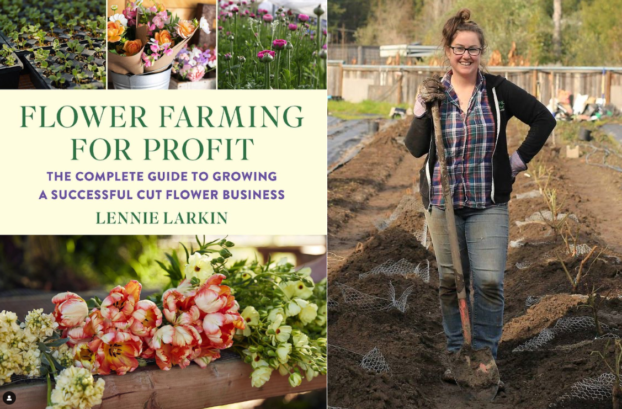
Three native plants + one terra cotta pot to satisfy hummingbirds

My second story is part of the magazine’s “Weekend Project” – an easy-to-accomplish design idea created by Patty Roess of the Tree of Life Nursery in San Juan Capistrano, California.

“Sweeten the Pot” includes all the steps you need to attract hummingbirds to your patio or deck with a container full of nectar-rich native plants. 

Here are the ingredients: 

  • a decorative container, at least 18 inches in diameter, to accomodate three plants
  • broken pottery shards
  • good-quality (organic) potting soil
  • native plants with features hummingbirds appreciate (tubular blooms, hot or bright colors, lots of nectar); Tree of Life suggests Dudleya edulis, Mimulus aurantiacus and Salvia clevelandii.
  • natural accents, such as stones and branches

1. Use one or more pieces of broken pottery to cover the drainage hole. 

2. Fill approximately 1/4 to 1/3 of the container with high-quality potting soil. Tree of Life Nursery uses a special fast-draining mix developed for native plants. To make your own mix, combine equal parts regular potting soil and commercial potting mix formulated for desert or cactus plants. 

3. Arrange plants in the container, placing the tallest plant toward the back. Add soil until it reaches 1/2- to 1-inch below the pot’s rim. Add decorative accents, such as mementos you have gathered in nature. Water thoroughly. In warm climates, you can transplant these California natives to a sunny garden as soon as they finish blooming.

Enjoy!

Related posts

A low-water planting recipe

Tuesday, June 1st, 2010

A dreamy landscape in the sky, designed by Lauren Schneider

If you pick up the June issue of Sunset magazine – the one with skewers of salmon on a cobalt blue plate on the cover – turn to pages 51 and 52.

There, you will see a short (and I mean short!) story by moi. It started out much longer, but is now not much more than the length of a photo caption.

As these things go, I can’t complain. Thanks to the way we communicate these days, full-length magazine articles now read like Cliff Notes versions of themselves. The photo tells most of the story and then a few captions and call-outs do the rest of the heavy lifting.

In this case, the story called “Lush Look, Low Water” was inspired by a rooftop garden owned by Mike McDonald and Jill Martenson, a visionary young couple who built Margarido House, the first LEED-H Platinum home in Northern California.

The “green” home and its eco-friendly landscape have received a lot of press, but the Sunset story really gives readers the specifics on designer Lauren Schneider’s approach to the roof garden. A special thank you goes to Sunset’s Julie Chai for shepherding this story from our initial conversation to the final publication.

Check out the attractive clumps of Libertia periginans, a New Zealand iris relative valued for its bronzy-orange blades and vibrant color.

Surprisingly dreamy, soft and fluid, despite its exposure to the harshest of elements (wind, sun, saltwater, for example), Lauren Schneider’s design can be replicated in similar rooftop or in-ground conditions. The photos you see here are mine. I included the original full-length story in my articles section.

Eight hardworking native and Mediterranean plants create the central elements of Lauren’s design:

Echinocactus grusonii, Golden barrel cactus

Lewisia cotyledon ‘Sunset Strain’

Nassella tenuissima, Mexican feather grass

Sedum spathulifolium ‘Cape Blanco’
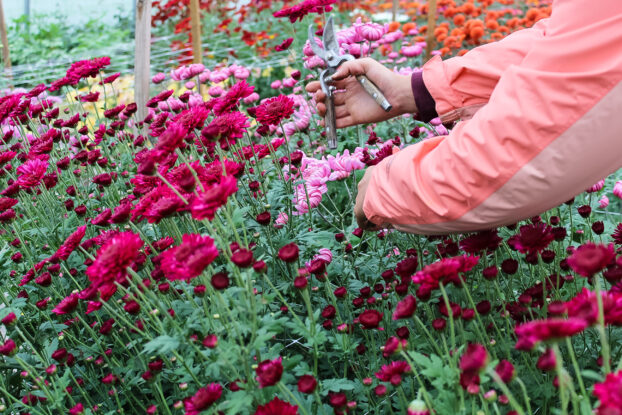
Lavandula multifida, Fernleaf lavender

Libertia perigrinans

Sedum rupestre ‘Angelina’

Sedum spurium ‘Voodoo’

Related posts