Debra Prinzing

Archive for the ‘Gardening’ Category

Coming to Southern California

Friday, April 5th, 2013

SLOW FLOWERS: Week 13

Sunday, March 31st, 2013

Beauty from Branches
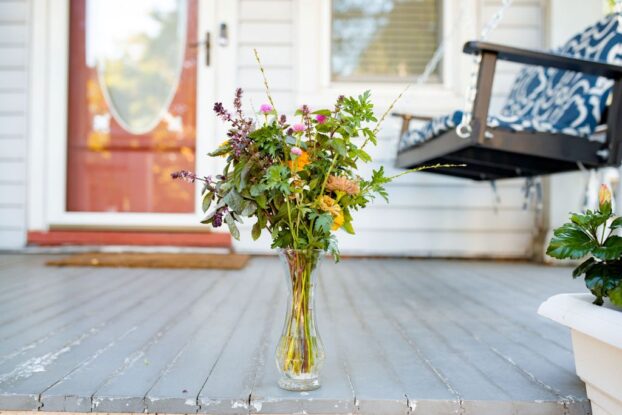
Beauty from Branches
A wistful combination of two spring-flowering branches, captured in the morning light. Aaah!

Ingredients:

Kerria japonica ‘Variegata’, which has white-edge leaves

Flowering quince (Chaenomeles x superba), available in coral, red, pink or white

Vase:

17-inch tall x 7-inch diameter cream urn. This is my go-to vase for last-minute arrangements and it is tall enough to handle the branches, which are nearly three feet long.

A vase filled with spring branches

If you add cut branches to the vase when the flowers haven’t yet opened, the warmth of your home will coax them into flowering indoors. . . for up to two weeks.

From the Farmer

Jump-start spring: Many flowering shrubs and trees are suitable for indoor forcing. In addition to Kerria and quince, you can cut the bare branches of forsythia, witch hazel and numerous fruit trees. Harvest branches when their buds begin to swell, taking care to use proper pruning techniques. Re-cut the stems on a 45-degree angle and place them in a vase of clean water. Over time, the buds will respond to your home’s warmer temperature and begin to flower. Be sure to change the water as you would with any floral arrangement.

NOTE: Each Sunday of this year, I will post my photographs, “recipe” and tip for that week’s floral arrangement, created for my new book, Slow Flowers.

Enjoy the floral journey through 52 weeks of the year~


SLOW FLOWERS: Week 12

Sunday, March 24th, 2013

Zen in Bloom

Showcasing a single type of flower - here, it's spring daffodils - this technique is easy and carefree.

Showcasing a single type of flower – here, it’s spring daffodils – this technique is easy and carefree.


Ingredients:

15 stems common daffodils, from my garden

Multiple lengths of coral-pink twig dogwood, cut approximately 2 inches wider than the vase opening. Any straight, woody branch will work, including vine maple, pussy willow or the colorful twig dogwood (Cornus sanguinea or C. sericea)

Vase:

6-inch tall x 6-inch square glass vase (this design adapts to any square or rectangular glass vase)

The daffodil stems are stabilized by a "raft" of twigs, lashed to cover the opening of the vase.

The daffodil stems are stabilized by a “raft” of twigs, lashed to cover the opening of the vase.

Other supplies:

Decorative pebbles

Twine-wrapped wire (available at craft stores in natural or green)

Design 101

Borrow inspiration: The idea for this bouquet came from a project featured in Design, a publication of The Flower Arranging Study Group of the Garden Club of America. Whenever you’re inspired by another designer’s technique, it’s important to give it your own twist rather than make a direct copy. For example, the original creation used florist’s foam inside the container, but I found it unnecessary, especially since the pebbles and twigs are enough to hold the daffodil stems in place.

NOTE: Each Sunday of this year, I will post my photographs, “recipe” and tip for that week’s floral arrangement, created for my new book, Slow Flowers.

Enjoy the floral journey through 52 weeks of the year~


SLOW FLOWERS: Weeks 10 and 11

Friday, March 15th, 2013

MAGNOLIAS AND MORE

Evergreen magnolia (Magnolia grandiflora), parrot tulips, rosemary, Japanese fantail willow and bare magnolia branches in bud fill one of my favorite white vases.

Evergreen magnolia (Magnolia grandiflora), parrot tulips, rosemary, Japanese fantail willow and bare magnolia branches in bud fill one of my favorite white vases.

A sweet detail of those luscious tulips - don't they play nicely with the rusty side of the magnolia foliage?

A sweet detail of those luscious tulips – don’t they play nicely with the rusty side of the magnolia foliage?

Ingredients:

5 stems southern magnolia (Magnolia grandiflora), harvested from my neighbors’ garden
12 stems apricot-hued parrot tulips, grown by Alm Hill Gardens
5 stems evergreen rosemary (Rosmarinus officinalis), harvested from my garden
3 stems Japanese fantail willow (Salix udensis ‘Sekka’), grown by J. Foss Garden Flowers
3 stems deciduous magnolia in bud, harvested by Oregon Coastal
Flowers
Vase: 17-inch tall x 7-inch diameter cream urn
Design 101
Proportion and Scale: These two related principles are among the most challenging to pull off correctly – in interiors and garden design, as well as in a vase. Proportion usually refers to size relationships within a composition, such as how each of the botanicals in this tall vessel is visually powerful. There are no wispy ingredients and the height of the arrangement is equal to the height of the vase. Scale indicates size in comparison to some constant, such as the human body. That’s where the terms “small scale” or “large scale” come in, since they refer to the out-of-the-ordinary size of things. With that in mind, think about the ideal interior setting for this vase. I think it would look stunning as the welcoming urn in a grand foyer or at the center of a large buffet table.

TULIPS & TWIGS

My cover shot, a perfect way to kick off springtime! Tulips, willows and camellia branches - all contained in a brilliant, matte green urn.

My cover shot, a perfect way to kick off springtime! Tulips, willows and camellia branches – all contained in a brilliant, matte green urn.

Ingredients:
12 stems red tulips and 10 stems yellow tulips, grown by Alm Hill Gardens
6 stems curly willow (Salix matsudana ‘Tortuosa’), grown by Oregon Coastal Flowers
8 stems Camellia japonica, from my garden
Vase:
5-inch tall x 6-inch diameter matte green urn with handles
From the Farmer
Water lovers: Unlike most floral design ingredients, tulips and willow branches seem to keep growing in a vase of water. You’ll notice that the tulip stems elongate a little each day. Some designers prefer to take the arrangement apart and re-cut the lengthened stems, but I like to observe the changes that occur. Willow is a water-loving plant, so you may discover that it sprouts tiny white roots under water and that small green leaves will push open, as if it is growing in soil. Enjoy a few days of this ever-changing dynamic.
A detail of the colors and textures of springtime.

A detail of the colors and textures of springtime.

NOTE: Each Sunday of this year, I will post my photographs, “recipe” and tip for that week’s floral arrangement, created for my new book, Slow Flowers. Enjoy the floral journey through 52 weeks of the year~


SLOW FLOWERS: Weeks 8 and 9

Sunday, March 3rd, 2013

Been busy here . . . in the midst of Flower & Garden Show season, so I missed last week’s bouquet. Let’s play catch up and here, I’ll feature Week 8 and Week 9:

 “JUST ADD LIME”

Oh how I love this combination of everyday garden blooms, including daffodils, forsythia and euphorbia - with a few sprigs of variegated geranium for contrast.

Oh how I love this combination of everyday garden blooms, including daffodils, forsythia and euphorbia – with a few sprigs of variegated geranium for contrast.

The spring green color of new growth is indescribably beautiful.

The spring green color of new growth is indescribably beautiful.

Ingredients:
All ingredients were harvested from my Seattle garden:
  • 5 stems donkey tail spurge (Euphorbia myrsinites)
  • 3 stems Euphorbia characias
  • 5 stems variegated rose mint scented geranium (Pelargonium Graveolens Group ‘Variegata’)
  • 7 stems forsythia branches (Forsythia x intermedia)
  • 7 stems daffodils (Narcissus sp.), unknown cultivars
Vase:
5¾-inch tall x 5-inch diameter glazed ceramic vase
From the Farmer
Working with euphorbia: Most plants in the spurge family produce a milky-white substance when cut. It can be irritating to the skin, so be sure to wear gloves when handling the plant. While harvesting, I place the stems in a bucket of water, separating them from any other cut ingredients. Then I bring them into my kitchen where I dunk the tip of each euphorbia stem into a bowl filled with boiling water from the teakettle. This seals the stems.  Some experts recommend searing the tips in a stove top flame, but that has proven too messy for my liking.

“HEADY HYACINTH”

A simple length of linen twine gathers these garden hyacinths. They practically arrange themselves!

A simple length of linen twine gathers these garden hyacinths. They practically arrange themselves!

Ingredients:

8 stems hyacinths (Hyacinthus orientalis), grown by Alm Hill Gardens

Vase:
7-inch tall x 7-inch square glass cube
Detail of the gathered bouquet

Detail of the gathered bouquet

Seasonal Choices

About those long stems: The typical garden hyacinth blooms on a relatively short stem – maybe 4-5 inches at the most. This limits the way hyacinths can be used in floral arrangements. According to Gretchen Hoyt, the way to stretch those stems is to trick them into wanting more light. “The longer you can deny them light, the more they stretch,” she explains. At the commercial flower farm, this process begins in dark coolers where bulbs are pre-chilled. When they are transferred to the greenhouse, the hyacinth crates are placed (in the shadows) beneath tables where tulips grow. If Gretchen wants to elongate those stems even further, “I’ll throw newspaper over them,” she says. Leaving bulbs on the stems is optional, but some designers do so to give the arrangement a rustic appearance.

SLOW FLOWERS: Week 7

Sunday, February 17th, 2013

“Lilies, Two Ways”

Two "lily" elements fill my antique majolica cachepot, set in the dining room window to catch the rare winter rays of sunshine

Two “lily” elements fill my antique majolica cachepot, set in the dining room window to catch the rare winter rays of sunshine

Ingredients:
12 stems lily-of-the-valley shrub (Pieris japonica), harvested by Oregon Coastal Flowers
5 stems white ‘Navona’ Asiatic lilies, grown by Peterkort Roses
Vase:
9-inch tall x 9¼-inch diameter majolica cachepot from the late 1800s. I found this unique piece in Palm Springs, in a shop otherwise filled with 1950s art glass. I simply couldn’t resist the botanical charm of the piece, so I splurged and ended up flying home with it on my lap!
A detail from inside the vase . . .

A detail from inside the vase . . .

Eco-technique

Flower frogs: I’ve made it a personal goal to stabilize flower stems with organic methods rather than the conventional florist’s foam or “Oasis.” That product, I have learned, contains formaldehyde and does not break down in landfills. An old-fashioned flower frog (in ceramic, glass or metal) is a great alternative. You can find flower frogs at flea markets or tag sales for a few dollars (or raid your grandmother’s supply). One of my favorites is a half-dome cage. It sinks to the bottom of the container and has ¾-inch square openings, ideal for woody stems. This is an arranging tool of the past, seriously useful for the present-day!

NOTE: Each Sunday of this year, I will post my photographs, “recipe” and tip for that week’s floral arrangement, created for my new book, Slow Flowers. Enjoy the floral journey through 52 weeks of the year~


Thank you, Constance Spry

Wednesday, February 13th, 2013
Yes, I have her signature in my used copy of "Flowers in House and Garden," published in 1937.  Signed in pencil, the inscription is dated February 1939.

Yes, I have her signature in my used copy of “Flowers in House and Garden,” published in 1937. Signed in pencil, the inscription is dated February 1939.


Lately, I’ve been reading a lot about the first celebrity floral designer, Constance Spry.

The famous Mrs. Constance Spry

The famous Mrs. Constance Spry

If you haven’t heard about her, check out the newish biography called The Surprising Life of Constance Spry, by Sue Shephard (2011). Mrs. Spry was at her peak of popularity between the two World Wars, and I loved reading about her magnificent cutting garden that supplied her London studio and shop called Flower Decoration in the ’30s, ’40s and ’50s.

Speaking of Flower Decoration, that is the name of a volume that Mrs. Spry wrote in 1933. Re-issued in 1993, you can find it online used, filled with her strong opinions, witticisms, and black-and-white photographs of floral arrangements. These are a little dated, of course, but what stands out to me is the eclectic lineup of ingredients, which includes many flowers, foliage and edibles that today’s hip floral designers think they’ve popularized.

Guess what? Mrs. Spry did it first!

The rest of us have just discovered the ingredients with which she created lush, naturalistic, unfussy bouquets. Cherry tomatoes, grape clusters, gourds, fig leaves, sea-kale, agapanthus seed heads, amaranth, rhubarb and artichokes are wonderful floral elements showing up in couture bouquets and magazine spreads. But Constance Spry used them first – and that’s quite fun to RE-discover.

READ MORE…

SLOW FLOWERS: Week 3

Wednesday, February 13th, 2013

“A Blue Bowl of Blooms”

Two completely different flowers – vivacious tulips and intricate witch hazels.

Two completely different flowers – vivacious tulips and intricate witch hazels.

Ingredients:
2 dozen mixed spring tulips, grown by Alm Hill Gardens
7 branches witch hazel (Hamamelis x intermedia ‘Jelena’), harvested from my garden

Vase:  5-inch tall x 9-inch wide cobalt blue vintage bowl with 6½-inch opening

From the Farmer
Direct from the source: When you shop for flowers at the farmers’ market, be sure to ask questions about where and how the flowers you purchase were raised. There is nothing better than meeting the farmer who actually grew your bouquet. You never know when that connection will lead to an invitation to visit a local flower farm!
NOTE: Each Sunday of this year, I will post my photographs, “recipe” and tip for that week’s floral arrangement, created for my new book, Slow Flowers. Enjoy the floral journey through 52 weeks of the year~

SLOW FLOWERS: Week 2

Sunday, January 13th, 2013

Winter’s Multi-Hued Palette

winter urn

This is what you can harvest during the 2nd week of January!~ Pretty amazing!

Ingredients:

Harvested from Jean Zaputil’s Seattle garden:
7 stems Corsican hellebores (Helleborus argutifolius)
5 stems Japanese aucuba (Aucuba japonica ‘Variegata’)
7 stems sweet box (Sarcococca confusa)
Harvested from Lorene Edwards Forkner’s Seattle garden:
3 stems oak leaf hydrangea (Hydrangea quercifolia)
7 stems witch hazel (Hamamelis x intermedia ‘Jelena’)
3 lengths Japanese honeysuckle (Lonicera japonica ‘Aureoreticulata’)
Vase:
12-inch tall x 8½-inch diameter vintage cream urn (lent to me by Lorene – thanks!)
Eco-technique
Easy-to-use twine: Here’s a great idea I learned from Jennie Greene, a Portland designer and partner in the flower shop called Artis + Greene. To anchor a branch, stem or vine in place, use bind wire. Available from craft
stores and floral supply outlets, spools of the pliable, twine-wrapped wire come in tan or green (you’ll need wire cutters to work with this material). In this arrangement, I allowed the honeysuckle to drape down the side and
wrap around the foot of the vase, using a short length of bind wire to secure it. The tie disappears into the foliage but does the trick to keep things in place.
More pics:

Beautiful detail of the oak leaf hydrangea and Corsican hellebore foliage


A “vine-wrap” detail embellishes the foot of this vase.

NOTE: Each Sunday of this year, I will post my photographs, “recipe” and tip for that week’s floral arrangement, created for my new book, Slow Flowers. Enjoy the floral journey through 52 weeks of the year~

Country Gardens: Over the Garden Gate

Monday, January 7th, 2013

Early Spring 2013


I’m used to being the one asking the questions, but recently, James Baggett, editor-in-chief of Country Gardens magazine, turned the tables on me. He asked me to participate in a Q&A for the “Over the Garden Gate” feature in Country Gardens. Here is the full interview below. A shortened version appears in the “Early Spring 2013″ issue, out this week on newsstands. THANK YOU Mr. Baggett~

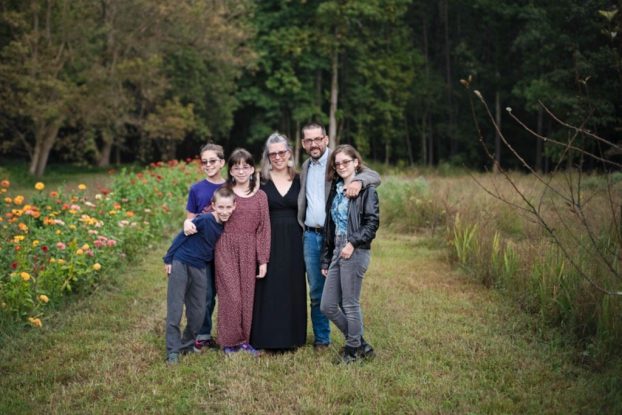
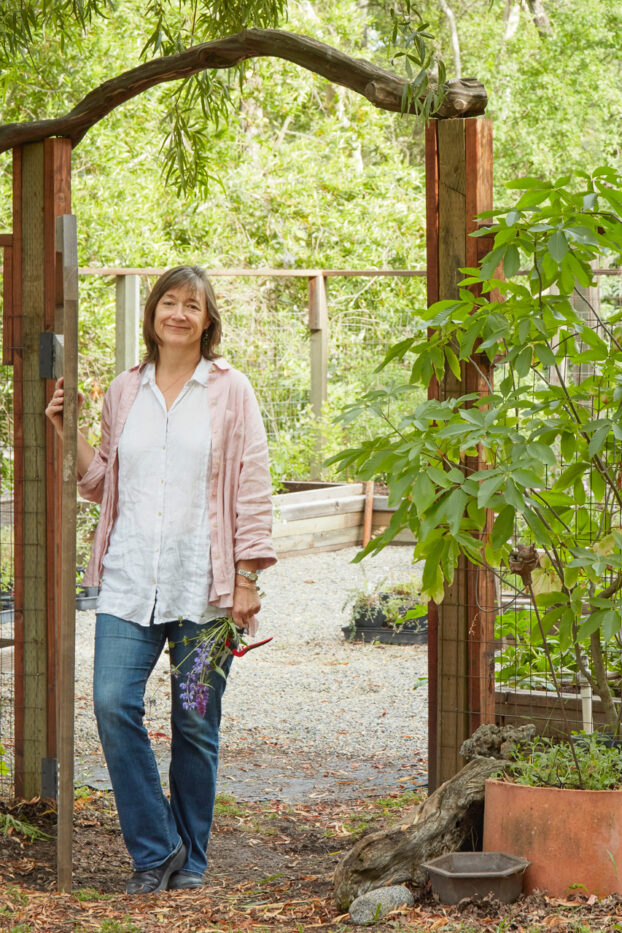
And a few more thank-you’s: Thank you designer Nick Crow, for making the page look so perfect; thank you to Diane Szukovathy and Dennis Westphall of Jello Mold Farm, for sharing your location (and great dahlias!) for the fun day of portrait work — and especially: thank you, talented photographer Mary Grace Long, for the nice image. No one likes to have their photo taken and you made it a blast!


Over the Garden Gate Q&A

Full Q&A:

1.      What gives you the most pleasure in the garden (keep it clean)?
Long ago, my friend Mary Robson, who has trained thousands of Master Gardeners in our area, taught me the most important way to enjoy the garden. “Be an observer,” she said. When I see the large and small changes that occur as the seasons come and go, I take pleasure in just being an observer. There are instances when I catch my breath and feel my heart race because a little bud is perfectly backlit at dawn or a tiny bird is perched on the fountain’s edge, giving herself a splash. Those fleeting moments of beauty mark the seasons and turn something ordinary in to a priceless gift from nature.

2.      When did you first become interested in gardening?
Like many children, I dabbled in the dirt alongside my grandparents. My own parents weren’t gardeners, but my paternal grandfather was famous in our family for his peonies and my maternal grandfather was equally famous for his prize dahlias. So I think flower gardening skipped a generation and now I’m channeling my grandfathers’ practice of maintaining a personal cutting garden. In my twenties, my interest in growing and gardening expanded into unbridled passion – thanks to two close friends who are both landscape designers (Karen Page, my college roommate, and Jean Zaputil, who I worked with at a textile design firm in the 1980s). I learned a lot from them. I call them my garden muses. Lucky for me, I’m a writer, so I’ve been educated while also interviewing famous gardeners and writing about incredible landscape designs.

3.      What’s the best garden advice anyone’s ever given you?
Van Bobbitt, who taught many of the horticulture classes I took at South Seattle Community College, was one of the first people to talk to me about natural gardening practices. He introduced his students to the idea that if a plant is failing or under stress you should evaluate its cultural conditions rather than just dosing it with a pesticide or fungicide. That excellent advice has empowered me to stop blaming the plant and start looking at the larger environment. More often than not, it’s the “right plant” in the “wrong place.” And there’s an easy solution to that problem.

4.      What—if anything—do you enjoy listening to while in the garden? (Me? Dusty Springfield, Terry Gross, and birdsong.) Do you have a playlist?
My playlist is in my head, James. As a writer forced to operate in the world of social media, I have far too many external stimuli – nearly all digital and electronic in nature. The restful quiet of being outdoors is simply too rare – I cherish it. I find that while I am tending to my garden, I reflect, imagine and dream. Whatever inner conversation I have, it’s always a rewarding one.

5.      What does being a country gardener mean to you?
Greater Seattle’s population is 3.7 million people, so I definitely live in an urban setting. But being a “country gardener” is a state of mind, right? I think it means having a conscious connection to the parcel of land where I garden, no matter if it’s on a busy street or under the flight pattern of the airport. My favorite quote explains my “country gardener” philosophy: “…surely, if you are privileged to own a plot of earth, it is your duty, both to God and man, to make it beautiful.”  — Beverley Nichols, 20th century English writer.

6.      What inspired your newest book, The 50-Mile Bouquet: Seasonal, Local, and Sustainable Flowers?

Seattle photographer David Perry and I collaborated on a storytelling project to document the groundbreaking changes taking place in the cut flower industry. It began in 2006 when we met several local flower farmers who were growing gorgeous, uncommon ingredients — and they had to work hard to break through the traditional “wholesale” marketing machine to sell their crops direct to area florists. We soon realized there were similar stories of intrepid flower farmers and nontraditional floral designers all around the country. We wanted to put a face on the flower farmer – and to inspire floral designers and their customers, as well as everyday supermarket shoppers, to start asking “where were my flowers grown?” and “who grew them?” It turns out that the field-to-vase movement is as exciting as the culinary world’s farm-to-table movement.

7.      How are you enjoying gardening in the Pacific Northwest as opposed to Southern California? What are the differences?
I gardened in Seattle for more than 20 years and then, all of a sudden, in 2006, we moved to Southern California for my husband’s work. It was a huge shock to my system and yet, from a gardener’s perspective, it was exhilarating because I learned an entire new plant palette. My garden in Thousand Oaks, California, had all sorts of cool California native perennials, grasses, and shrubs; succulents, aloes and cactuses; and plants from other Mediterranean regions like South Africa and Australia. It was like taking a crash course in low-water gardening.

And just when I started to figure things out, we returned to Seattle in 2010. So I’m back to shade gardening and zonal denial. Every single time I fly back to Seattle from my frequent SoCal trips, I have a little pot of something wonderful in my carryon. That’s the benefit of having a spot in my garage to shelter everything that’s not winter-hardy during Seattle’s cold, wet season. So far, my California succulents have made it through two Seattle winters, so I think my method is working. There’s a benefit to having lived both in the Northwest and the Southwest: I now feel like I’m a true gardener of the West. And that feeling is enhanced by the wonderful community of fellow gardeners I’ve found wherever I live.

8.      Describe your dream garden for us.
I have my dream garden. It’s a beautiful series of mixed borders and flower beds with a fish pond (which I inherited and am learning to care for), a white pergola and a covered porch with vintage white wicker furniture and an outdoor fireplace. I even have a peek-a-boo view of Lake Washington that greets me every morning. My husband, Bruce Brooks, is great with the lawnmower, too. My only other “dream” would be to have a full-time gardener to keep up with the weeding, dead-heading and other chores.

9.      What lessons has your garden taught you?
Back to the idea of being an observer, I feel like when we pay attention to what’s happening in nature, our spirits and souls are enriched. The garden teaches both patience and acceptance. It also teaches that reward comes after work. Having spent all of my childhood listening to my father’s sermons and my mother’s Sunday school lessons, I learned a bit about giving a benediction –– the promise of hope at the end of a church service. I wrote a gardener’s benediction in one of my books. I didn’t realize that’s what it was until I saw it in print. But I think it describes my relationship with the garden: “I wish you a wonderful journey that will introduce you to many generous and supportive gardening friends … May your gardens be free of slugs; may your soil be rich and organic; and may you enjoy equal parts of rain and sunshine.”

10.   What’s next on your green-hearted agenda?
I’m wrapping up a solo project, which is a sequel of sorts to
“The 50 Mile Bouquet.” Called “Slow Flowers: Four Seasons of Locally Grown Bouquets from the Garden, Meadow and Farm,” it will be published February 2013 by St. Lynn’s Press.  I challenged myself to design and photograph one bouquet every week  for an entire year. I only used ingredients from my garden or those grown and harvested by local flower farmers, even in the coldest months when most people assume there’s nothing available. In the process, I discovered that gardeners are ideally suited for floral design. We know the habit, form, peak of bloom and best qualities of the plants we grow – and we know how to combine them with in the landscape, so why not in a vase?

11. Anything else you would like to add that I’ve neglected to ask?
For the past five or six years, the grow-it-yourself trend has dominated the gardening world. And that has resulted in the pendulum swinging far towards the edible side of things. While many think it’s frivolous to grow flowers or care about how/where they were grown (i.e., the carbon footprint of imported flowers), I think the conversation is changing. Even though we don’t eat flowers, we do need their presence in our gardens – if only as a nectar source for pollinators or a seed source for birds. There is an important equilibrium that takes place when flowers – annuals, perennials and biennials – are cultivated, especially in the vegetable garden. You might be motivated to grow flowers for economic reasons, or to preserve heirloom varieties, or to attract beneficial insects. Whatever your reason, we need flowers in our lives, and in our gardens.