Do search

Archive for the ‘General’ Category

Romantic, locally-grown flowers for a September Bride

Thursday, August 18th, 2011

The boutonniere sample for Rashad.

My niece Marquis is marrying her sweetheart Rashad next month and Aunt Debby volunteered to design the flowers. Marquis’s color palette is soft yellow and white, which at first I thought would be a little too simple or possibly limiting in the floral options.

However, after we visited our favorite local flower farmers and saw all the wonderful options, I have a new-found love of the color combination.

As partners in a vase or bouquet, yellow and white flowers are simply romantic! Marquis asked that I use more yellow ingredients in her bouquet so it will be more visible against her white dress; the bridesmaids will have more white ingredients in their bouquets – which will show off against their pale yellow dresses. Great idea!

With amazing fresh, seasonal and locally-grown ingredients from Jello Mold Farm, J. Foss Garden Flowers and Oregon Coastal Flowers, I made the samples this week so Marquis could see how the designs would look . . . and to help me figure quantities of stems. Here is a sneak peek – I think they are absolutely summery and joyous, just what you want for a wedding:

Bridal bouquet for my niece Marquis

Ingredients include: White scabiosa with pale green centers (pincushion flower), two types of white dahlias – ‘Bride-to-Be’ and ‘Little Lamb’; two types of yellow dahlias – ‘Nettie’ and ‘Candlelight’; feverfew (the little white buttons, actually Chrysanthemum parthenium); yellow sprays of solidaster for a soft touch; and variegated scented geranium foliage from my garden. The solidaster is a hybridized cross of a goldenrod (solidago) and aster. So if it’s not still growing next month, we’ll substitute regular goldenrod, which will create the same dreamy affect.

A little detail of the bridal bouquet.

Here's how the mostly-white bridesmaid bouquet looks - it's also about one-third smaller than the bride's bouquet.

Finally, the centerpieces. We are going to use the same shallow glass Ikea bowls that created the centerpieces for Marquis’s sister’s wedding receiption last spring. But this time, instead of floating orchids and candles, I thought about creating a “nest” out of curly willow around the inside rim. The center will have a stunning floating dahlia, like ‘Snowbound’, the dinner-plate-sized one shown here. And I’ll weave smaller yellow flowers into the willow. Today, I played around with helenium, just to see how it looks.

The low glass bowl is filled with curly willow, yellow heleniums and one dinnerplate dahlia - in white.

You know, this floral design focus of mine has been really rewarding, both as a storyteller and garden writer. But there’s one really wonderful surprise that has come out of the four years I’ve spent working with photographer David Perry to document the local, seasonal and sustainable flower movement (see our blog, A Fresh Bouquet, for lots more details).

It has begun to dawn on me that I am a creative individual and I love to design and arrange with cut flowers. And while I am totally self-taught, I am actually good at it. I contend that gardeners are the ideal people to be floral designers. We know the habit, form and life-cycle of the ingredients we use, which is more than one can say for some in the conventional florist world. And so I am ever grateful for the opportunities I am given, like my niece’s upcoming wedding, to move my hands off of this keyboard, pick up a pair of snips – and begin to create.

Enriched and Exhausted

Wednesday, August 10th, 2011

One of Treephoria's lovely flowering dogwoods, aka 'Heart Throb'.

Dear friends and readers, I’m sure you’ve just about given up on ever seeing an fresh, new blog post, since I nearly allowed the month of July to come and go without writing anything.

July was definitely enriching – my over-filled calendar says so! And yet, I am also exhausted (see my prior post, referencing moving to a new home, garden, and pond). Possessing countless experiences in need of personal review and reflection, I had planned to share the more colorful events here in a single post – a diary of sorts from the past month. Yet, since my just-crashed computer is in hospital, complete with most of my stored photos (my external hard-drive has to be replaced, too!), I don’t have much to show you.

The beautiful landscape of tree farms, across the field from Nancy Buley's Treephoria.

So the July recap will occur in stages. Phase One covers July 5th-6th when I visited a few rural towns outside of Portland, Oregon.

I rode the train from Seattle to Portland on July 4th of all things, and my 4-hour journey was lovely, relaxing, and quiet. What a nice way to skip out on the potential holiday craziness on the freeway. Upon arrival, I rented a car and drove to the hamlet of Boring, Oregon.

Here I am with Nancy Buley (right), on a tour of J. Frank Schmidt & Son's expansive tree farm in Boring, Oregon.

My friend Nancy Buley lives there and she let me stay under the eaves of her farmhouse, in a room she calls the “garret,” the window of which overlooks Treephoria, her boutique tree farm.

Nancy is a tree ambassador who works closely with landscape architects and designers to educate and excite them about awesome ornamental varieties grown by J. Frank Schmidt & Son.

As director of communications, she frequently writes and speaks about new tree introductions, landscape design and tree selection/care. I first met Nancy years ago through Garden Writers Association, but our friendship was actually forged during a fun evening in Oklahoma City in 2007, when Sally Ferguson included us both in her small dinner party. That’s often how things go: We may only see one another a few times a year, but the kinship is cemented and immediately recalled whenever we meet.

Weeping giant sequoias, stately-looking against the Oregon sky.

Nancy treated me to a fabulous visit, including a walk at dusk around her grounds. At Treephoria, she and her son Neil Buley grow specialty trees in small batches. Nancy possesses a keen eye for the uncommon, but she also evaluates trees for their performance in the residential landscape. She defines Treephoria as, “the rapturous feeling or state of being experienced when surrounded by remarkable trees.”

Nancy, showing off a gorgeous 'June Snow' dogwood tree at J. Frank Schmidt & Son's display garden in Boring, Oregon.

That is indeed how I felt. I didn’t want to leave! In fact, when given the choice of going out to a restaurant for dinner of staying in the garden surrounded by trees with a picnic of leftovers you can guess what I chose to do!

A highlight of our tour-at-dusk was Nancy’s flashlight-led visit to the stone barn behind the rows of trees. This two-story structure was once the headquarters for Compton’s Dahlias, a commercial dahlia bulb farm owned by Nancy’s aunt and uncle. Wooden trays, retro-style packing boxes and other vestiges of the flower farm made me almost wish she could trade trees for dahlias.

The next morning, I set out to meet photographer Laurie Black and her husband Mark King to shoot profiles of two garden artisans for a feature that will run in Country Gardens magazine next year. I’ll give you a peek about those locations in my next July recap post.

A pond in my backyard

Sunday, July 3rd, 2011

Our new house, Seattle, Washington

We finally settled in a new home last month, transitioning from a house we had rented after moving from LA back to Seattle a year ago.

Last fall, the Real Estate Gods (or possibly the powers of a statue of St. Joseph, buried upside down in our California front yard – our agent Barbara’s insurance policy!) smiled on us. We sold that house after it was on the market for NINE months (!). Then, we kicked off 2011 with the hunt for a new permanent residence in or near our former neighborhood here in Seattle.

Our “hunt” felt futile and endless, that is until Mother’s Day, when we made an offer on a home in Seward Park that felt like everything we could have ever dreamed of. After a day of agonizing back-and-forth, the sellers accepted our offer.

So, more will be written about the beautiful garden and move-in-ready house (yeah! no renovations required!), but for now, I need to discuss the fish pond.

A sunny corner of the fish pond.

Yes, along with the amazing residence, excellent plants cared for oh-so-lovingly by the former owners, and a peek-a-boo view of Lake Washington, this property has a bonafide water garden. With lots of pretty gold, orange and white fish. Fish that I called “Koi” for nearly a month until I was disavowed of that assumption. Well, to me, they looked like “small” koi. Guess what? I am the proud Mama of 10 (give or take) ornamental goldfish.

Inheriting a pond comes to me in an ironic way. Presently, I am immersed in a writing project – to update Sunset’s Garden Pools, Fountains & Waterfalls. The book was most recently published in 2007, and is in need of refreshing with new photography and text. So as the project’s writer, I’m up to my ears in Water Gardens. But since I have never owned more than a bubbling fountain, um, well, I only know about fish ponds from a theoretical point of view.

“Guess what?,” I wrote to my editor Bridget. “We bought a new house and it has a fish pond!!! How funny is that?”

Owning a fish pond does not immediately translate into knowing how to own and care for fish. But I knew exactly where to go and who to ask for help. In 2002, I had another writing project, to update the 9th edition of an essential regional book called The Northwest Gardener’s Resource Directory. Created and nurtured for more than a decade by the amazing Stephanie Feeney, who passed away in 2000, this book is the Yellow Pages of everything Oregon, Washington & British Columbia gardening enthusiasts need to know.

Oasis Water Gardens - a hidden oasis in the city!

Oasis Water Gardens is an important entry in the Resource Directory. Founded by Dianne & Bob Torgerson in 1988, this nursery is indeed an OASIS in the middle of an industrial/commercial area just south of downtown Seattle. If you’re in search of water-friendly flora and fauna, here is the place to start!

I knew I had to get my act together after our 2nd week in the new place. Prompted by the fact that I ran out of the stock of fish food left by the sellers, I stopped by Oasis Water Gardens last week and met Dianne. We certainly knew of each other (Seattle’s gardening community is pretty tight) but we had never before met in person. After she made sure I was using the correct food for my fishies, I casually asked: “Dianne, do you ever do in-person consults?”

Red Nose in his temporary bucket-pond.

Yes, of course! And so, Dianne came to see my pond and meet my fish a few days ago. One of the first things she told me is that we have a very sick fish. He has some kind of internal hemorrhaging. She could tell this by the salmon-pink cast to his lovely fins. He also has dark red markings across his nose, thus his new name “Red Nose.”

“All you have to do,” Dianne coached me enthusiastically, ” is use your big net to catch your fish – and bring him into the nursery.”  Our plan unfolded: The following day, I was going to bring our sick fish in a large bucket containing water from the pond to Oasis. Easy, right?

I could NOT have executed this idea without my son Ben’s help. After watching me flail around for a few minutes, he said, “Mom, let me do it.” The trick was first catching Red Nose, and then gently sliding him into the bucket without tearing any of his ruffled tail fins. Stress-FULL!

httpv://www.youtube.com/watch?v=3_wu7BW0y_8

Fish in bucket, bucket wedged behind the passenger’s seat of my Subaru, and a verrrrrry careful drive about 5-miles away to Oasis. Dianne had readied a “quarantine” pond in her greenhouse for Red Nose. He will live there for a couple of weeks while receiving antibiotics. The reason he has to be isolated is that the anti-Bs are placed into the pond water – so we don’t want every fish in our pond to receive those doses.

Red Nose, transferred from bucket to big plastic bag . . .

Dianne sent me home with all the stuff I need to get on top of pond ownership, including: pH test kits, ammonia test kits, nitrite test kits, bacteria additive (the good kind – for the biofilter); and a parasite treatment (she noticed that one of our brilliant orange fish had scratches on his side – indicating that he was itching himself against a rock, which is a giveaway that he has some kind of parasite).

Ben also lent his muscle to helping me wrangle the huge roll of 2-inch thick mesh out of the biofilter so I could hose it off and re-install it. I only have to do that level of cleaning every 6 to 8 weeks, but I think next time I’ll wear my rainproof overalls. It is a big, wet, messy project.

Yesterday, after taking the pH, ammonia and nitrite readings; after cleaning the biofilter, and after treating the pond for parasites, I unwrapped all my beautiful blown-glass floats and placed them among the waterlilies to add sparkle to the pond. What I first considered a huge hassle is going to turn into a daily dose of serenity – there’s something quite restful about watching the water flow into the pond and catching the flash of orange fish bodies dashing to and fro.

Oasis Water Gardens is an amazing resource for fish (Koi and goldfish) owners, pond and pool owners, people who have decorative fountains, and people who wish to add water plants to container gardens. Here are some photos from the nursery to give you an idea of the variety I found there:

Container Design Lecture

Tuesday, June 14th, 2011

Do your containers make you happy? SCOTT EKLUND Photograph, 1997

Do you find container design a frustration?

A terra cotta heart-shaped container, filled with succulents.

Recently, Andrew Buchanan, a photographer friend and former Seattle Post-Intelligencer colleague, told me that Slides.com is the best value for scanning 35mm slides into digital files. It costs about $1.00 per slide, which is a good bargain compared with $2.50 per slide that local labs charge. 
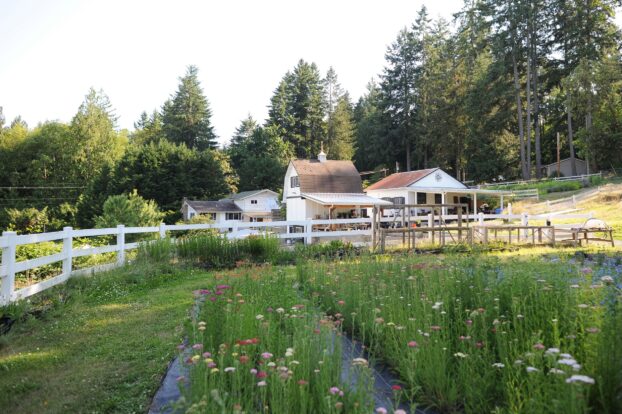
As an experiment, I sent 44 cardboard- and plastic-framed slides that have resided for years in a Kodak carousel tray to Slides.com to see what they could do.
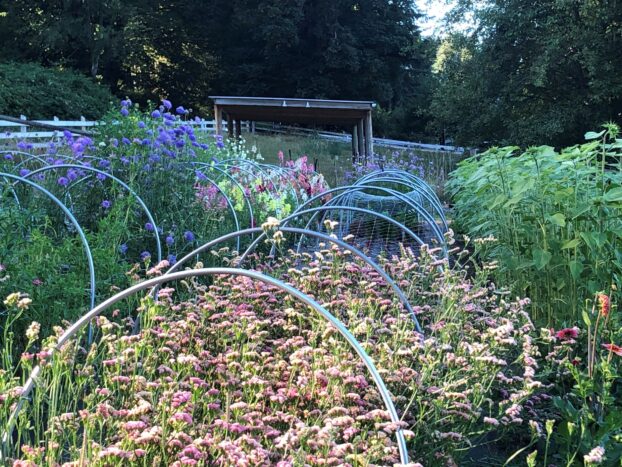
Kay at Slides.com emailed the files to me today – just in time for tomorrow’s lecture.  As it turns out, the digitals seem crisper and brighter than the originals…and they can be manipulated, cropped and re-sized. Pretty handy! 
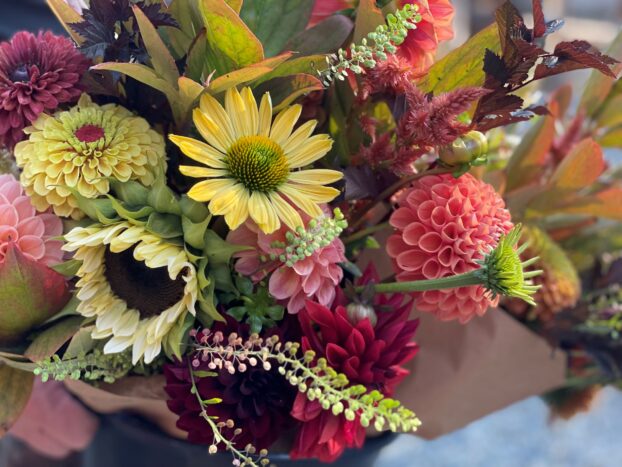
Happily, my talk’s opening slides look great. And they are very sweet. The little boy you see above as a baby and at left as a bored toddler who I dragged to a container plant trial is now 14 years old, about to begin High School in the fall. Time certainly flies – in the garden . . . and with children!

Contemporary trellises for your upwardly-mobile plants

Wednesday, June 1st, 2011

 Note: a version of this story appeared in the print edition of last Saturday’s LA Times HOME section and in today’s LA Times @ Home blog.

Jennifer Gilbert Asher and Karen Neill of TerraTrellis

This is their beautiful "Gracie" arbor, inspired by the shape of nursery hoop houses

Instead of a spindly, mass-produced support for your rose or bougainvillea, why not give that over-achiever a sturdy structure on which to climb? And why not train those vines and tendrils on a framework that’s both artful and functional?

Los Angeles landscape designer and artist Jennifer Gilbert Asher has reinterpreted classic garden ornamentation into modern, colorful – and durable forms.  Her TerraTrellis collection of steel tuteurs, arbors and wall trellises offers a stylish alternative to the type of generic (and often impermanent) metal and wood pieces you might find online or at big-box stores.

The pod-like 'Toki,' which Jennifer says was inspired by a Faberge egg!

“Playful architectural forms and compelling colors in the garden are what’s behind this collection,” says Asher, who also creates more expensive works of modern outdoor sculpture through TerraSculpture, a studio co-owned by Karen Neill. Pieces in the TerraTrellis collection range from $279 to $579.

Like the studio’s larger sculpture pieces, TerraTrellis’s pieces are fabricated by Mario Lopez, who runs a metal studio in south Los Angeles. The steel pieces are hand-welded and use stainless-steel hardware and cables. They are oxide-finished or cloaked in a joyous array of powder-coated colors like kumquat, berry and leaf.

Familiar forms from public gardens and even the agricultural landscape inspire the designs.

Here's the lovely color palette ranging from oxidized steel to powder-coat finishes

For example, the lines of TerraTrellis’s “Gracie Modern Arbor,” which looks like a 76-inch diameter double-circle emerging from a pathway, echo the shape of hoop houses that dot Southern California’s plant nurseries. The 58-inch high “Lazio Vase Trellis” is a scaled-down homage to the giant rebar artifices that contain riotous bougainvillea at the Getty Center’s Central Garden.

“These pieces are designed not only to support a plant, but to integrate with it,” Asher says. “This union ultimately forms a work of freestanding, living art in the landscape. We want people to tap into their inner landscape designer and have fun exploring interesting combinations of plant with trellis.”

Pot-ted (www.pottedstore.com) in L.A.’s Los Feliz neighborhood will carry the TerraTrellis collection. You can also order the pieces online at www.terratrellis.com

Here are some other designs in the collection – perfect for your stylish potager or rose border!

Lazio, trellis inspired by the majestic rebar structures that hold bougainvillea vines at The Getty Center

Ina, like a picture frame, for your wall or fence.

Akoris, a leaf green French-style tuteur, with a sculpted wire orb on top.

Detail, showing stainless steel cabling.

How about a pair of vertical trellises for your fence?

This one stands freely, like an artist's easel

Is pink this year's unexpected surprise color for the garden?

Jamie Durie’s very personal version of The Outdoor Room

Saturday, May 28th, 2011

This view takes in the two cabanas on the left and the dining pavilion at the opposite end of the pool

I joined Jamie Durie, of HGTV’s “The Outdoor Room,” for brunch and an interview in LA

I’ve been after celebrity garden designer Jamie Durie for more than a year to let me come and do a story about his personal Los Angeles backyard. I sensed he was stalling because, like many of us who make gardens (or write about them) for a living, our own outdoor environment is the LAST thing to receive our attention!

Turns out, Jamie and his producers of “The Outdoor Room” on HGTV  were cooking up big plans for his hillside property in Los Angeles’s Laurel Canyon.

Jamie reimagined the long-neglected yard, dominated by a vintage 1950s swimming pool, into a gorgeous series of outdoor living spaces. The magical transformation occurred over a three week time, and became the debut episode of The Outdoor Room’s season three, which aired earlier this year (you can see a schedule of re-runs of this episode by following this link).

In late February, I received an out-of-the-blue phone call from Jamie, saying: “The garden is finished – you’re invited to come see it!” Wow – this guy is good to his word.

Here's a bird's-eye view of the transformed outside living space - photographed from Jamie's hillside deck

We had a narrow window of a couple week’s time in which I could get down to LA for a photo shoot and interview, since Jamie was about to fly back to Australia for several weeks to shoot another show there. Whew. That guy lives a marathon life and makes it all look effortless. But we made it work. Here is my profile of Jamie’s project, which appears in today’s print and online editions of The Los Angeles Times.

The Los Angeles Times sent one of its very best photographers, Irfan Khan, to document the beautiful landscape. You can check out his web gallery of gorgeous shots here. I also took lots of reference photos to use while writing the story, and thought I’d post some of my favorites below.

Jamie asked me to include the many great resources he used to pull together this extreme garden makeover. So in case you’re curious, here is that list:

Resources & Materials

Bath: “The Outdoor Room” craftsman Steve Zimpel created the bath using recycled cedar from Durie’s original design.

Decking: Fiberon composite decking

Doors: LaCantina bi-fold doors

Fire: Escea outdoor gas fireplace; Durie Design Fire Pit

Furniture: Walter Lamb for Brown and Jordan reproduction chairs and chaises from Design Within Reach; all-weather wicker sectional, Durie Design.

Kitchen: Fuego modular kitchen.

Plants: Monrovia

Vertical garden system: Woolly Pockets

Pool Makeover: Jamie worked with Aric Entwistle of Los Angeles-based H2o Development Inc. to replace a conventional chlorine system with Spectralight, which uses ultraviolet light to kill pathogens and waterborne bacteria. The renovated pool is solar heated with a system from Suntopia Solar. A new infinity edge was fabricated over the original coping using carbon fiberglass, resin, high-tensile adhesives and several coats of waterproofing. It’s finished with Bisazza glass mosaic tiles.  

Like a raft floating over the garden, the upper deck provides excellent glimpses of the garden below.

Here's a bird's-eye view of the transformed outside living space - photographed from Jamie's hillside deck

I love this view from above, which shows how the box-beams form planting channels, and how the Roman shades create a canopy roof for the cabanas.

Here's the exterior of two pivoting planted "walls." When opened, they connect Jamie's bedroom to the garden.

A gorgeous detail of the stacked stone contained by one of two 7-foot gabion tree planters that Jamie designed

Here's a nice detail shot from inside the dining pavilion. You can see how the concrete retaining walls hold the hillside back and also form the interior walls where planters are hung and pillow-backs are rested.

A dreamy morning shot of the outdoor living room, featuring Jamie's own all-weather sectionals and a custom fire pit.

Inside the dining pavilion.

A detail showing how the Woolly Pockets vertical wall system adds foliage and flower texture behind the cabana.

The full-size view of the gabion tree planter - one of two in the garden.

At the end of my interview with Jamie, he talks about how much he enjoys living here. And it’s a perfect way to sum up the feelings I also had being in the highly personal garden environment: 

“Life just seems a whole lot more hectic in Sydney,” Durie says. “You can’t say that about Laurel Canyon. All I ever hear are birds. I’ve got squirrels running along the top of my green wall. An owl moved in once I finished the garden, and we’re starting to be visited by a ton of hummingbirds. I may not have kangaroos and koalas, but it’s kind of fun telling my mates back home that I’ve got coyotes in the canyon.”

Thank you for sharing your garden, Jamie. It was a treat! I hope you slow down long enough to really enjoy it~

Flowers, friends and fun in Colorado

Thursday, May 26th, 2011

Here I am with Arthur Williams, talented floral designer from Babylon Floral in Denver.

Where have I been lately? Last week, I hopped on an airplane and flew to Denver, which surprisingly is only 2-1/4 hours away from Seattle.

At the invitation of the Denver Botanic Gardens, my collaborator David Perry and I spent three lovely days giving talks and workshops about some of our favorite topics. We met some wonderful new friends and were inspired by the DBG’s beauty as a public space for all of Denver to enjoy.

Last Wednesday evening, I spoke about the “Personal Outdoor Dwelling,” aka “stylish sheds,” featuring many of Bill Wright’s gorgeous photos from our book Stylish Sheds and Elegant Hideaways.

Then on Thursday, David and I made a joint presentation on “A Year in Flowers: Seasonal, Local and Sustainable Ingredients.” We split the talk into two parts, an illustrated lecture and a flower design demonstration.

My arrangement from the demonstration, featuring Colorado-grown flowers and choke-cherry foliage from the Denver Botanic Gardens.

I was so fortunate that Denver floral artist and designer Arthur Williams, of Babylon Floral, helped procure locally-grown cut flowers for me to work with. Not only that, but he lent me some vases to use. We so enjoyed meeting Arthur and visiting his colorful shop (he’s pretty colorful, too – check out his arms!).

The following morning, Dave taught a hands-on photo workshop that wowed his students with new-found skills for their point-and-shoot digital cameras.

David's photography talk included practical, hands-on training at the botanic garden.

While Dave was with his students, I wandered along the Botanic Garden paths and through the various themed displays, taking in early Rocky Mountain spring day.

We found that the pace of spring’s unfolding in Denver is quite similar to Seattle’s this year. In other words, cooler than normal and later than normal. You’ll see what I mean in the photos I took.

On Friday, we spent a delightful afternoon with my friend and former editor Marlene Blessing. Marlene was my editor on The Abundant Garden and she also created the Pacific Northwest Garden Survival Guide and asked me to write it in 2004. She is an awesome writing coach and an encouraging advisor from whom I learned a lot about storytelling and book creation. I gained much confidence as a writer while working with this dear woman.

Marlene is presently the editor-in-chief of Interweave Press Books. After all the hue and cry about the publishing world falling apart, we took great comfort in the inspired, aggressive and confident approach to niche publishing embodied by this Loveland, Colorado-based imprint. With an emphasis on fiber arts and craft books, Interweave is led by a highly creative and innovative group, including Marlene. You can only imagine the compelling topics we covered during dinner later that evening. Marlene calls Interweave Press founder and creative director Linda Ligon her “Sensei,” but we kinda want to call Marlene our very own Sensei — what a breath of fresh air in a world of book-making!

Chet Anderson (center), with his mom Belle (left) and wife Kristy (right) at their Boulder County Farmer's Market booth.

After eating a delicious meal at Sugarbeet, a hip Longmont restaurant, we retired rather late and incredibly satisfied with our productive day. Bright and early Saturday morning, I picked Dave up at his hotel and we drove about 30 minutes to Boulder. There, we met up with Chet and Kristy Anderson, owners of The Fresh Herb Co., at their Boulder County Farmer’s Market booth.

Chet and Kristy’s farm is actually in Longmont, and they sell most of what they grow through Whole Foods and other retail outlets, but they still bring herb plants, hanging baskets and cut flowers to this market every Saturday. It is the only market in this part of Colorado that requires its vendors to sell what they produce. No dealers or re-sellers here. You meet the growers, purveyors and farmers who have raised or produced their goods – from amazing mushrooms to colorful Easter egg-colored radishes, to beautiful bouquets and more.

Rows and rows of luscious lilies fill 15,000-square-feet of covered growing area at The Fresh Herb Co.

It was fun to walk the market with Chet, who, I swear, could easily be called the “mayor” of the Boulder County Farmer’s Market. His popularity seems second only to his mother Belle’s popularity. She is there every week, helping at The Fresh Herb Co. booth, talking with new and returning customers, and greeting other vendors as longtime friends. It was fun to meet her!

David, Leesly Leon from the Denver Botanic Garden, me, Kristy and Chet Anderson - a group portrait at The Fresh Herb Co.

We followed Chet back to the family’s homestead and farm so that David could do some photography before a tour group from Denver Botanic Garden arrived. Leesly Leon, the DBG’s adult program coordinator, lined up the field trip so that some of the students in our workshops could have a first-hand visit to a flower farm. Chet and Kristy are very successful at what they do, but they are also passionate and humble about their role in bringing flowers from their fields to the customer’s vase.

 ”When you know and meet the grower, and when the flowers are fresh and locally grown, there’s no better flower bargain,” Chet told the group. We couldn’t agree more!

Here are some more photographs from our trip – I loved every moment, every visual impression, and the great people we met.

Friday garden field trip

Thursday, May 12th, 2011

Sigh. What else can you say in response to these gorgeous, white bleeding hearts?

Well, this field trip was LAST Friday, but you’ll enjoy my photos all the same. If you don’t know about the July 22-25th Garden Bloggers Seattle Fling, then check it out here.

My pals Lorene, Marty and Mary Ann  and I were persuaded to “host” this horticultural free-for-all that can be best decribed as a weekend of garden touring and networking for bloggers around the globe.

Lorene and I headed out last Friday to scout a couple amazing residential gardens that we want to include on the tour, as well as the Bellevue Botanical Garden. It’s truly still spring here in Seattle; I’ve been away for four years, living and gardening in Zone 10-+, but I don’t remember this persistent rain, wet, gray, chilliness as late as mid-May. So when you see the photos I took on May 6th, you might be surprised! They look very April-ish, don’t they?

Even still, it was exhilarating to have a glimpse of the soon-to-arrive “season” of blooming and unfurling. Please enjoy along with me:

What a sultry combo, spotted at Michelle and Christopher Epping's garden in Newcastle. This will be a stop on the Bloggers' Fling. Yummy Rodgersia + sooty-black Mondo grass.

I love this modern, see-through, cube-planter at BBG. I want one, preferably in this gorgeous weathered steel.

More steel, this time in an orb, suitably displayed in a bed of tumbled riverrock.

Stone totems paired with grasses create a lovely entrance at the Bellevue Botanical Garden.

A Foraged Dinner at The Herbfarm

Saturday, May 7th, 2011

The Herbfarm Restaurant

Last weekend I was a guest at The Herbfarm, the only AAA 5-Diamond restaurant west of Chicago and north of San Francisco, rated number 1 in the Pacific Northwest for both food and service by the Zagat Guide

Dining there is a true “culinary experience” that draws food aficionados from around the world. I’ve been fortunate enough to eat at The Herbfarm Restaurant on three prior occasions dating back to 1995 when I dragged Bruce there to celebrate his appointment as Seattle’s deputy mayor. Our friends Jenny Ulum and Tim Gleason actually flew to Seattle from Eugene, Oregon, in order to join us at that meal. 

The menu cover reads: "What was Paradise? But a garden. . . "

The Herbfarm Restaurant proprietors Carrie Van Dyck and Ron Zimmerman hosted fellow writer Robyn Cannon and me for an unforgettable meal last Sunday evening. We’re talking a four-and-a-half-hour, nine-course extravaganza that celebrates locally grown ingredients prepared with innovation and ingenuity. I say unforgettable, in that years after an evening at The Herbfarm, one can instantly recall tasting (perhaps for the very first time) a specific dish or uncommon ingredient. Oh, and did I mention that each course is paired with a Northwest libation selected by Sommelier Tysan Dutta? The wines are chosen to complement and enhance every bite. 

The Herbfarm’s history is long and not without drama (including a fire that destroyed the original Herbfarm location in Fall City, Washington, that was started by Ron’s parents in 1974 as a small nursery, followed by challenges trying to gain permission to rebuild). 

I have such fond memories of the old-timey Herbfarm. When my oldest son Benjamin was little, I used to take him out there to see the herb garden and a few farm animals. We still have the lavender-filled stuffed bunny rabbit, which we found in the gift shop. Those expeditions usually involved bringing along another mom and child to have a picnic in the herb garden. 

Carrie Van Dyck begins each meal with a tour of the garden.

The Herbfarm Restaurant’s current location in Woodinville dates back to 2001 when Ron and Carrie had to pick up and move the entire restaurant. They constructed a charming English-Tudor style cottage that houses antiques, a vintage fireplace, and tables that overlook the kitchen-as-theatre all night long. 

Robyn and I were staying at the adjacent Willows Lodge where we attended the Pacific Northwest Travel Writers Conference. And that’s how we ended up sneaking out of the proceedings late Sunday afternoon to join Carrie as she hosted the pre-dinner tour. The Herbfarm and Willows Lodge share a vegetable and herb garden where raised beds and clipped boxwood balls are interconnected by crunchy hazelnut shelled pathways. 

Carrie picked and passed around some of the edible ingredients that diners might expect to taste that evening — tulip petals, sweet cicely, sorrell, lovage, thyme, fennel and lemon verbena. We stopped to visit the resident pair of Vietnamese potbelly pigs named Basil and Borage, who reside in a pen next to the composting area. That seems appropriate, doesn’t it? 

Once we followed Carrie indoors and were seated for dinner, Ron took the stage to explain a bit more about the menu development. The Herbfarm creates 26 different themed menus each year, based on the seasonal availability of ingredients and the culinary whims of the chef Chris Weber and his team. By the way, Chef Chris is one of the youngest 5-star chefs in the country. Possibly THE youngest. What a talent! (more…)

When lilacs meet hellebores . . . and play with fritillaries

Friday, April 29th, 2011

A yummy spring bouquet - straight from local farms and fields

 Springtime is embodied in this vase, isn’t it?

Take a visual "whiff" and enjoy this combination of three lovely flowers.

You can almost smell that heady perfume associated with Syringa vulgaris, or the common lilac. To me, the fragrance is associated with my lifelong relationship with flowers. 

We lived in rental house in Connecticut when I was in elementary school; the backyard was home to an overgrown lilac that drew me to its blossoms (we loved playing underneath the flower-laden branches and smelling spring). 

Later, when I was a teenager, I remember secretly harvesting armloads at a city park and carrying them to school in May, as if I was in a pageant! 

When we planted our former Seattle garden in the late 1990s, I asked my friend Karen to select a lilac for the border. She chose one called ‘Sensation’ – it has deep purple florets and each petal is rimmed in white. That shrub never disappointed. . . and I waited for its blooms each year until we moved away. 

And most recently, while living in Southern California, I nearly fainted when I happened upon a lilac farmer at my local market. I was so fascinated to learn lilacs can grow there at a high elevations, such as in Lancaster, Calif., north of LA. I even had to run back to my car for my camera so I could interview her about those unforgettable flowers

Another closeup - I can't resist!

Today’s bouquet features the addition of several Jadeite-green garden hellebores and a few sultry plum-and-yellow Fritillaria assyriaca. These companions turn two bunches of just-cut lilacs into a sweet bouquet for my fireplace mantel. 

And the best thing about these blooms? They’re from local Northwest flower farmers – yeah! 

The lilacs were grown by Oregon Coastal Flowers in Tillamook, Ore. 

The hellebores were grown by Jello Mold Farm in Mt. Vernon, Wash. 

The fritillarias were grown by Choice Bulb Farms in Mt. Vernon, Wash. Check out David Perry’s gorgeous still life of this unusual flower at our blog, A Fresh Bouquet

If you’re a floral, event or wedding designer, be sure to meet these fabulous farmers at Seattle Wholesale Growers Market. If you’re a customer, be sure to ask your designer to patronize this amazing cooperative of local growers. Their motto is awesome: From Farm to Florist.

Here’s a link to a little post and gallery from my visit earlier this week.