The Slow Flowers Podcast is the award-winning show known as the “Voice of the Slow Flowers Movement.” Launched in 2013 as the original flower podcast, we’ve devoted more than 10 years to covering the business of flower farming, floral design, and the Slow Flowers sustainability ethos. Listen to a new episode each Wednesday, available for free download here at slowflowerspodcast.com or on iTunes, Spotify, and other podcast platforms.
It’s engagement season and many of our wedding and event designers are busy at this time of year, consulting with prospective couples and pulling together concepts and proposals. For Slow Flowers designers, those who infuse their business values with sourcing and sustainable considerations, there’s an important added layer involved.
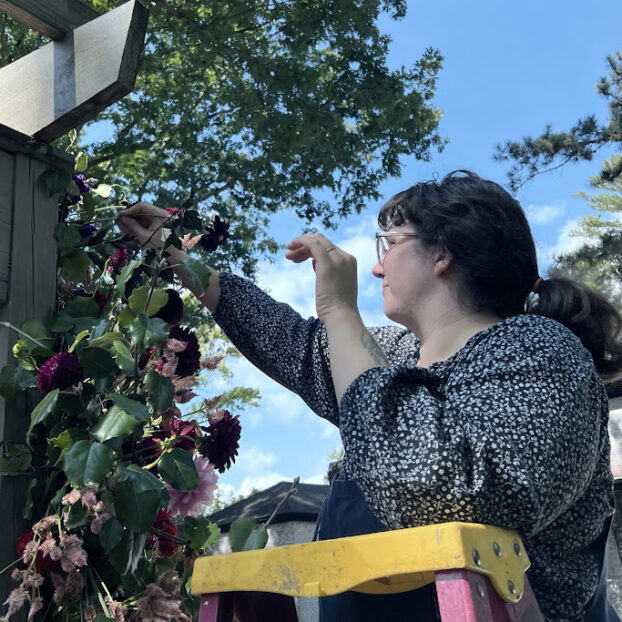
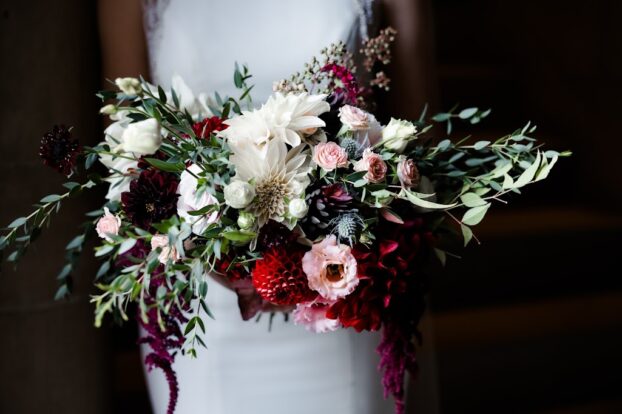
Jessica Stewart of Bramble & Blossom
Today’s guest, Jessica Stewart, is well aware of the importance of educating clients about having a local and seasonal approach to designing their wedding flowers. We asked Jessica to unpack all the elements involved in running Bramble & Blossom, and to share her approach to communication during the sales process.
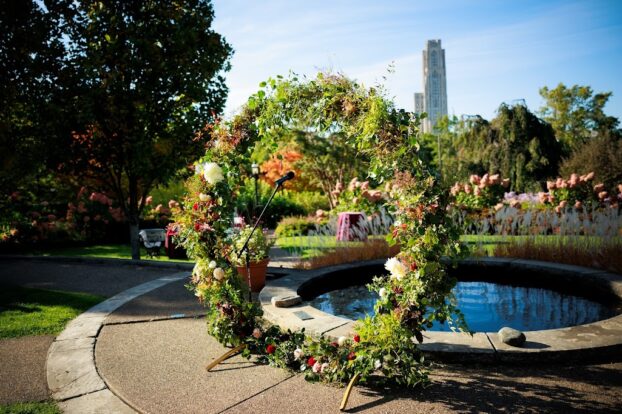
Sustainable and seasonal wedding arch by Bramble & Blossom
Jessica recently gave an incredibly detailed presentation for the January Slow Flowers Member (virtual) meetup and we recorded it to share it as today’s Podcast Episode. You’ll be treated to Jessica’s approach about how she designs for seasonality and sources from local flower farms to produce gorgeous, romantic, evocative weddings.
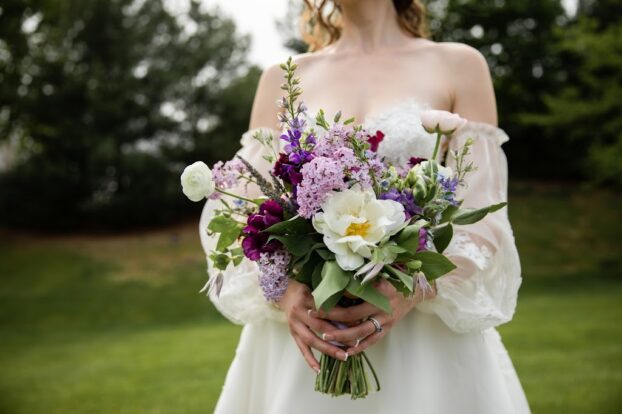
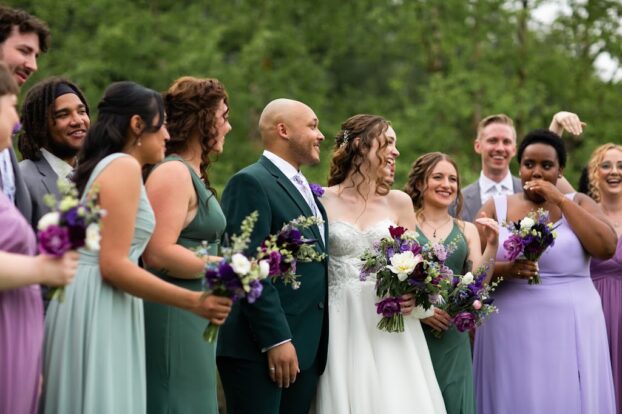
Wedding by Bramble & Blossom
Jessica’s presentation includes details on how she prepares contracts + proposals; and how she sources and plans for weddings and installations. Her expertise is priceless and you’ll want to listen in.
Here’s a little bit more about Jessica Stewart of Brambles & Blossom, an Eco-Friendly Pittsburgh Wedding Florist
The tagline for Bramble & Blossom includes these guiding principles: Ethical. Sustainable. Anti-Racist. Inclusive. Accessible. Intentional. Stunning.
Joy and Intentionality come across through florals
You’ll notice these characteristics in each Bramble & Blossom design, and in turn, realize how special and rare these qualities area. As Jessica writes on her website: “This seems like a #HumbleBrag at first glance. But the truth is, we wish there was more competition.”
She continues:
There’s a brief moment when each bloom has its peak. As a florist, that moment is what I love most about working with flowers. As a wedding florist, aligning that day with your wedding day is what I live for. That intentionality is the ethos of Bramble & Blossom.
Our signature style centers on timing things just so. We select every shape, color, and texture in your arrangements to reflect the landscape and hues of the place where you’re getting married and the love story that you’ve shared with us. We exclusively source seasonal, American-grown flowers so that Mother Nature can wish you a happy anniversary each year as those varieties blossom.
Everything should feel connected. Because everything is. Your personalities, your love story, your flowers, your wedding day — they were all meant to be. Just like finding a wedding florist you connect with on a deeper, values-centered level was meant to be.
Romance in bloom
We love this tribute to Slow Flowers on Bramble & Blossom’s home page!
Before we jump right into Jessica’s presentation, I want to pause and mention how much I appreciate this gifted woman and her support as a Slow Flowers member. As you’ll hear in our opening conversation, I first met Jessica and her former partner Justine Lacey when they owned Foxglove Floral Design Studio in Brooklyn. They women appeared on Episode 136 of the Slow Flowers Podcast – in April 2014, during the first year of this podcast. It is so encouraging to me to continue that conversation now, and to realize that one decade later Jessica remains committed to her sustainable values. Let’s welcome her back to the Slow Flowers Podcast.
This show is brought to you by Slowflowers.com, the free, online directory to more than 750 florists, shops, and studios who design with local, seasonal and sustainable flowers and to the farms that grow those blooms. It’s the conscious choice for buying and sending flowers.
Thank you to Longfield Gardens, which provides home gardeners with high quality flower bulbs and perennials. Their online store offers plants for every region and every season, from tulips and daffodils to dahlias, caladiums and amaryllis. Check out the full catalog at Longfield Gardens at longfield-gardens.com.
Thank you to Rooted Farmers. Rooted Farmers works exclusively with local growers to put the highest-quality specialty cut flowers in floral customers’ hands. When you partner with Rooted Farmers, you are investing in your community, and you can expect a commitment to excellence in return. Learn more at RootedFarmers.com
Thank you to Johnny’s Selected Seeds, an employee-owned company that provides our industry the best flower, herb and vegetable seeds — supplied to farms large and small and even backyard cutting gardens like mine. Find the full catalog of flower seeds and bulbs at johnnyseeds.com.
Thank you for joining me today! The Slow Flowers Podcast is a member-supported endeavor, downloaded more than one million times by listeners like you. Thank you for listening, commenting and sharing – it means so much. As our movement gains more supporters and more passionate participants who believe in the importance of our domestic cut flower industry, the momentum is contagious. I know you feel it, too. If you’re new to our weekly Show and our long-running Podcast, check out all of our resources at SlowFlowersSociety.com
Thank you for listening! Sending love, from my cutting garden to you! (c) Missy Palacol Photography
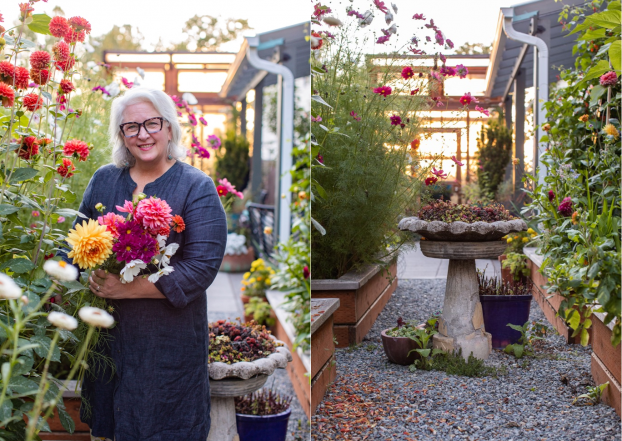
I’m Debra Prinzing, host and producer of the Slow Flowers Show & Podcast. The Slow Flowers Podcast is engineered and edited by Andrew Brenlan. The content and opinions expressed here are either mine alone or those of my guests alone, independent of any podcast sponsor or other person, company or organization. Next week, you’re invited to join me in putting more Slow Flowers on the table, one stem, one vase at a time. Thanks so much for joining us today and I’ll see you next week!
Jessica Hall of Harmony Harvest Farm and The Mum Project
PROMO CODE: Harmony Harvest has provided a promo code for our listeners and viewers. You can apply this to any retail or wholesale order SLOWMUMS
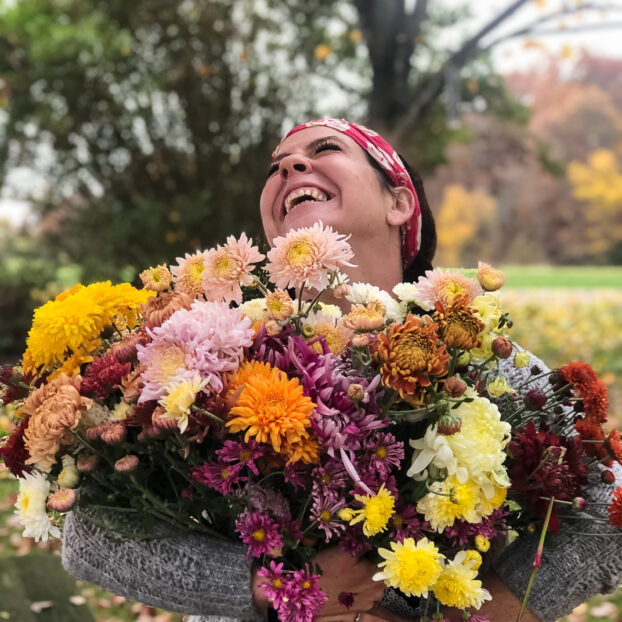
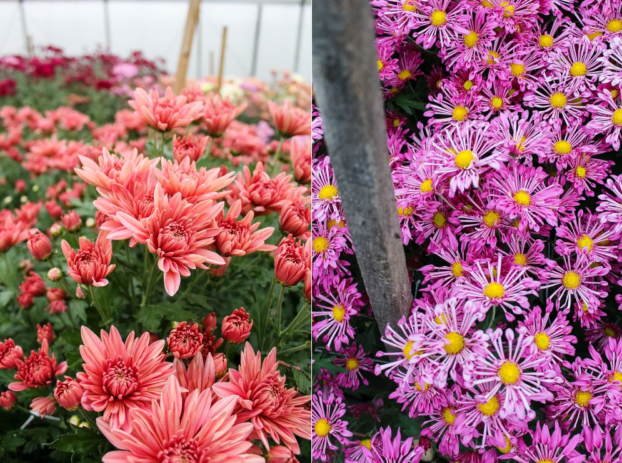
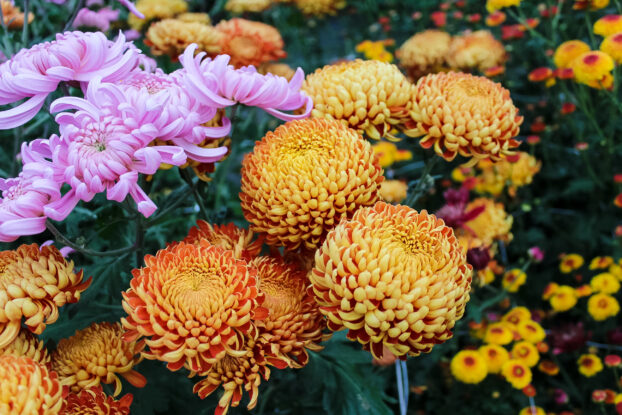
I’m welcoming Jessica Hall of Harmony Harvest Farm back to the Slow Flowers Podcast today with an update on her Weyers Cave, Virginia-based farm’s expanding collection of specialty, old-fashioned, heirloom, and hard-to-find chrysanthemums for growers and gardeners. The Mum Project, as it is called by Jessica and her partners, mom Chris Auville, and sister Stephanie Duncan, reflects the ambitious journey on which these women have embarked to educate themselves and the entire floral community about the exquisite qualities of chrysanthemums.
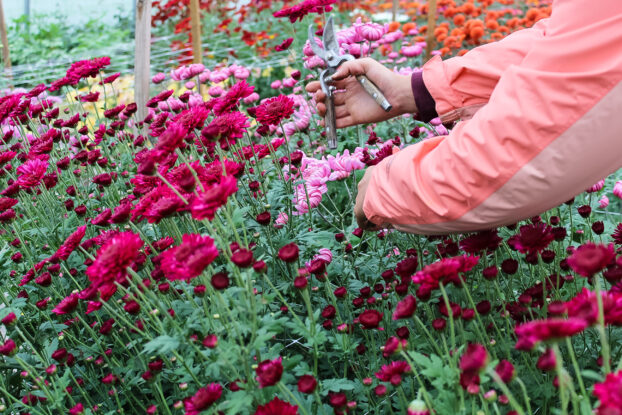
Harvesting mums at Harmony Harvest Farm
They have networked extensively with other chrysanthemum aficionados, from members of the national chrysanthemum society to growers of public garden collections. Their goal is to expand the Harmony Harvest list of “mother” plants from which they can take cuttings, propagate more plants, and offer high quality plug to growers. In the process, they also are advocating for other flower farmers to get in on the mum game, offering educational resources and events to elevate understanding about growing mums.
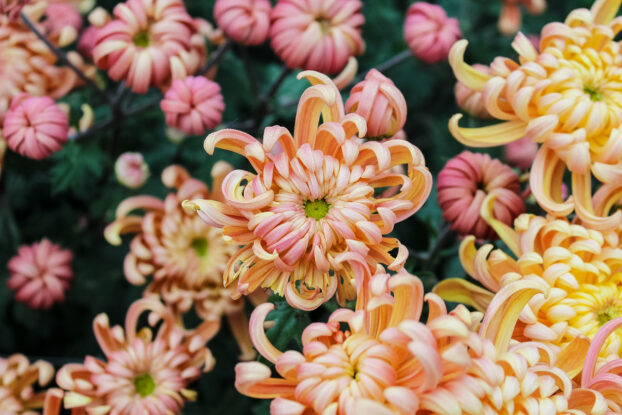
Beautiful apricot chrysanthemum petals
To peruse the collection of mums – ranging from ‘Apricot Alexis’, with a blushy-salmon color and a cascade of curving petals, to ‘Vesuvio’, an ultra-weird creamy-ivory chrysanthemum that begs the question – “are you sure that’s a mum?”, there are more than 50 selections in the current inventory of plugs, or plant starts, offered at both retail and wholesale programs.
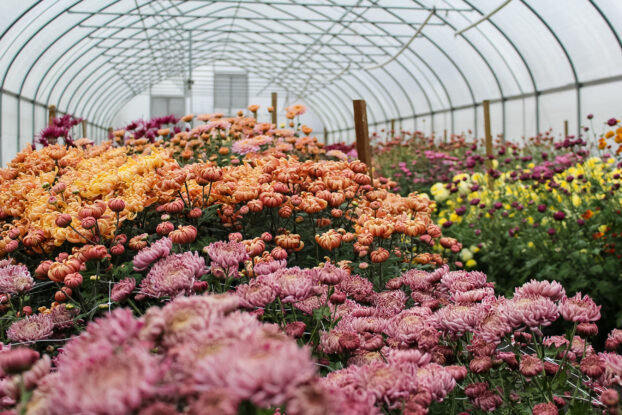
Inside the high tunnel at Harmony Harvest Farm
Let’s jump right in and join my conversation with Jessica. Because of the time of year, there isn’t much to see in terms of rows of colorful chrysanthemum plants, but Jessica did send us a small video she filmed inside one of the three chrysanthemum growing houses at Harmony Harvest. We’ll see that first and then move right into our conversation, recently recorded on January 11th.
The Mum Project has a scope of more than 50 specialty chrysanthemum varieties
Thanks so much for joining me today! As you heard us discuss, in collaboration with the USDA and other agriculture authorities in states across the US, Harmony Harvest Farm is compliant with all required regulations, training, and inspections. I don’t know about you, but I’m inspired and because I don’t have a lot of cutting garden space, I’m looking at my front garden border with a new point of view, thinking about where I can perennialize some of the juicy chrysanthemums among my grasses, shrubs, roses and other permanent plantings!
PROMO CODE: Harmony Harvest has provided a promo code for our listeners and viewers. You can apply this to any retail or wholesale order SLOWMUMS
News of the Week
The New Year is off to a great start, and I love hearing from our listeners and viewers about how inspired they feel after learning from our guests. If I haven’t said it often enough, our programming is the “voice” of the Slow Flowers Movement and we love showcasing our members and their stories. As we think about the shifts, opportunities and changes in the floral landscape for 2024, I hope you took a moment to read the just-released Slow Flowers Floral Insights & Industry Forecast, our 10th annual report. I’ll share the link in our show notes for you to check it out. And, we’re honored that the UK-based lifestyle publication House & Garden has picked up on the forecast, reporting on three of our seven insights and those influences on the gardening world for 2024.
This show is brought to you by Slowflowers.com, the free, online directory to more than 750 florists, shops, and studios who design with local, seasonal and sustainable flowers and to the farms that grow those blooms. It’s the conscious choice for buying and sending flowers.
Thank you to The Gardener’s Workshop, which offers a full curriculum of online education for flower farmers and farmer-florists. Online education is more important than ever, and you’ll want to check out the course offerings at thegardenersworkshop.com.
Thank you to Red Twig Farms. Based in Johnstown, Ohio, Red Twig Farms is a family-owned farm specializing in peonies, daffodils, tulips and branches, and a popular peony-bouquet-by-mail program. Learn more at redtwigfarms.com.
Thank you to the Seattle Wholesale Growers Market, a farmer-owned cooperative committed to providing the very best the Pacific Northwest has to offer in cut flowers, foliage and plants. The Growers Market’s mission is to foster a vibrant marketplace that sustains local flower farms and provides top-quality products and service to the local floral industry. Visit them at seattlewholesalegrowersmarket.com.
Thank you for joining me today! The Slow Flowers Podcast is a member-supported endeavor, downloaded more than one million times by listeners like you. Thank you for listening, commenting and sharing – it means so much. As our movement gains more supporters and more passionate participants who believe in the importance of our domestic cut flower industry, the momentum is contagious. I know you feel it, too. If you’re new to our weekly Show and our long-running Podcast, check out all of our resources at SlowFlowersSociety.com.
Thank you for listening! Sending love, from my cutting garden to you! (c) Missy Palacol Photography
I’m Debra Prinzing, host and producer of the Slow Flowers Show & Podcast. The Slow Flowers Podcast is engineered and edited by Andrew Brenlan. The content and opinions expressed here are either mine alone or those of my guests alone, independent of any podcast sponsor or other person, company or organization. Next week, you’re invited to join me in putting more Slow Flowers on the table, one stem, one vase at a time. Thanks so much for joining us today and I’ll see you next week!
Music Credits:
Drone Pine; Gaena; Bridgewalker; Turning on the Lights by Blue Dot Sessions http://www.sessions.blue
Today’s guest is longtime Slow Flowers member Toni Reale, owner and creator of Roadside Blooms in North Charleston, South Carolina. Let’s learn about how she takes risks to grow her diversified floral and plant enterprise – I’m certain that you’ll gain some tips for your business!The shop specializes in weddings, events and everyday deliveries using near 100 percent American- and locally-grown blooms.
Toni Reale, Roadside Blooms
Toni founded Roadside Blooms with a story to tell and a mission to share, believing that beauty and sustainability don’t just co-exist, they work in concert. With over 10 years of experience in the event-planning and floral-design industries, Toni’s many adventures led her to successful entrepreneurship of a values-based enterprise. She has a Master’s degree in geology and taught geology at the College of Charleston; she converted a 1971 British ice cream truck into a mobile flower shop (the original Roadside Blooms) and is a leader of Charleston’s “green and local” movement, Toni has served on various nonprofit boards, including the Charleston Green Fair, and she was recognized as one of Charlie magazine’s “50 Most Progressive” in Charleston in 2014.
Production day at the Seashore Farmers’ Lodge No. 767; Toni Reale (right) attaches a vibrant palette of Lowcountry S.C.-grown blooms, including those from Laura Mewborn of Feast & Flora Farm (left).
Toni partnered with Laura Mewborn of Feast & Flora to create a beautiful botanical couture design for American Flowers Week 2019, collaborating with her friend Giovanni Richardson, a Sea Island Gullah Chieftess, who modeled the historically significant floral garment. I’ll share a link to their story in today’s show notes.
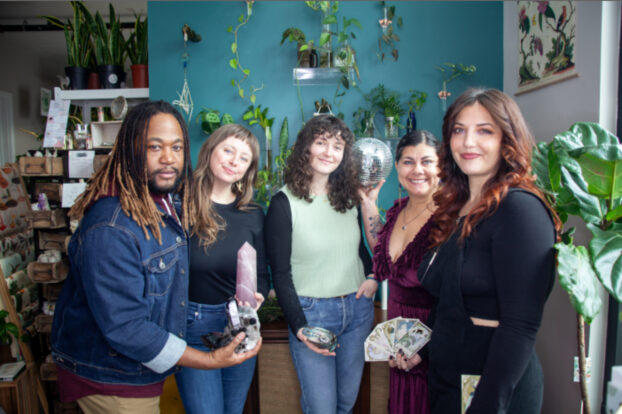
The Roadside Blooms team (Toni Reale is second from right)
Let me tell you why I asked Toni to be my guest today. We have been tracking the innovation in the floral retail space over the past years, and when I learned that Toni expanded Roadside Blooms to a larger store this past summer, I wanted to learn more. As you may have heard in our 2024 Slow Flowers Floral Insights & Industry Forecast, which I shared in last week’s episode, one of our key insights is called “Floral Literacy.” I shared about the exciting retail news that Slow Flowers members represent a countertrend in brick-and-mortar retail, including Roadside Blooms’ new retail floral spaces, and others’ new ventures, which are closely associated with values, community, and an unique approach to locally-sourced flowers.
So let’s jump in and meet Toni Reale of Roadside Blooms. Toni filmed a few short video clips to share the interior and exterior of her new shop and I’ve edited those into my recent interview with her. Thanks so much for joining us today – I am so inspired by the story that Toni Shared and she gave me a jolt of encouragement that I hope you felt, too. Her approach to a collaborative entrepreneurship is her “secret sauce” for success. We wish her continued success in the coming year!
The Slow Flowers Summit Early Bird Registration campaign has come to a close and we congratulate the folks who took advantage of the money-savings opportunity to grab early registration! Ticket sales continue through June – and if you’re already a Slow Flowers member, you’ll receive $100 off your registration, which is the equivalent of the Standard annual membership, so it basically pays for itself! In the coming weeks, we’ll be highlighting more of our speakers and more about some of the special experiences associated with joining our community in Banff, Alberta, Canada – June 23-25th!
This show is brought to you by Slowflowers.com, the free, online directory to more than 750 florists, shops, and studios who design with local, seasonal and sustainable flowers and to the farms that grow those blooms. It’s the conscious choice for buying and sending flowers.
Thank you to Longfield Gardens, which provides home gardeners with high quality flower bulbs and perennials. Their online store offers plants for every region and every season, from tulips and daffodils to dahlias, caladiums and amaryllis. Check out the full catalog at Longfield Gardens at longfield-gardens.com.
Thank you to Johnny’s Selected Seeds, an employee-owned company that provides our industry the best flower, herb and vegetable seeds — supplied to farms large and small and even backyard cutting gardens like mine. Find the full catalog of flower seeds and bulbs at johnnyseeds.com.
Thank you to Mayesh Wholesale Florist. Family-owned since 1978, Mayesh is the premier wedding and event supplier in the U.S. and we’re thrilled to partner with Mayesh to promote local and domestic flowers, which they source from farms large and small around the U.S. Learn more at mayesh.com. It was nice to hear that Toni works with her local Charleston branch of Mayesh to source American grown flowers – that’s good news!
Thank you for joining me today! The Slow Flowers Podcast is a member-supported endeavor, downloaded more than one million times by listeners like you. Thank you for listening, commenting and sharing – it means so much. As our movement gains more supporters and more passionate participants who believe in the importance of our domestic cut flower industry, the momentum is contagious. I know you feel it, too. If you’re new to our weekly Show and our long-running Podcast, check out all of our resources at SlowFlowersSociety.com
Thank you for listening! Sending love, from my cutting garden to you! (c) Missy Palacol Photography
I’m Debra Prinzing, host and producer of the Slow Flowers Show & Podcast. The Slow Flowers Podcast is engineered and edited by Andrew Brenlan. The content and opinions expressed here are either mine alone or those of my guests alone, independent of any podcast sponsor or other person, company or organization. Next week, you’re invited to join me in putting more Slow Flowers on the table, one stem, one vase at a time. Thanks so much for joining us today and I’ll see you next week!
Music Credits:
Drone Pine; Waterbourne; Turning on the Lights; Gaena by Blue Dot Sessions http://www.sessions.blue
It’s 2024~ Welcome to a New Year! This is the 10th year we’ve produced the Slow Flowers’ Floral Insights and Industry Forecast, which originated in 2015 as a series of media presentations that we also shared with members and listeners.
This episode is accompanied by two important, free resources. First, a video report that I recently recorded with Robin Avni, creative director of BLOOM Imprint, our Slow Flowers publishing venture. This is the video companion to today’s podcast. Click above to watch.
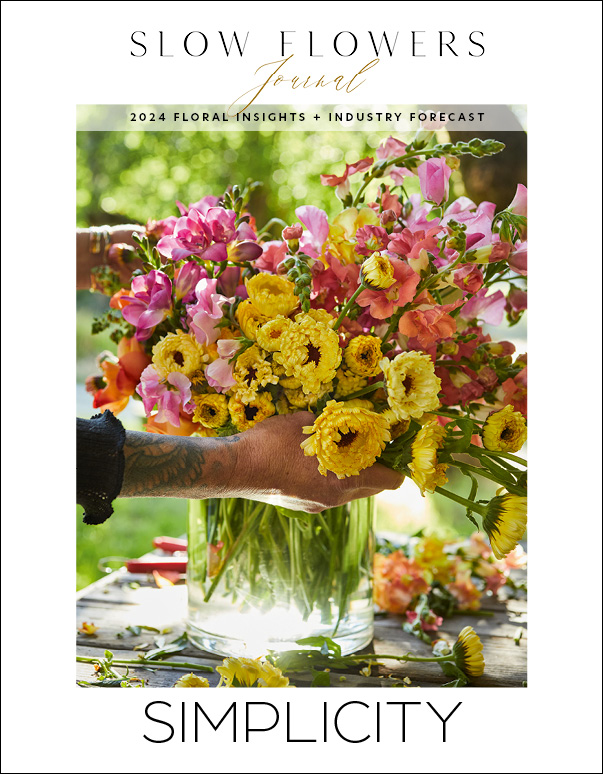
We have also produced a 38-page digital magazine-style report, filled with deeper analysis of each of our 2024 insights.
Here’s a bit more about Robin Avni. She is a creative veteran in the media and high-tech industries whose experience includes 15-plus years in the publishing industry and eight years at Microsoft in design and creative management. Robin has successfully managed innovative, award-winning design teams and high-profile projects and she has received numerous national design and photography editing awards for her own work.
Robin has produced more than 15 books, including seven titles created for the BLOOM Imprint catalog. In 2004, following Microsoft, she founded bricolage*, a consultancy specializing in creative strategy, content development, and trend analysis focused on the home and garden. She has worked with Fortune 500 companies, national advertising agencies and award-winning media properties, applying timely actionable insights to their businesses.
Let’s jump right in and embrace 2024 – we’re calling it The Year of Simplicity! I can’t wait for you to learn about each of the insights and the people who have influenced and inspired us to identify them.
The Slow Flowers Summit Early Bird Registration campaign has come to a close and we congratulate the folks who took advantage of the money-savings opportunity to grab early registration! Ticket sales continue through June – and if you’re already a Slow Flowers member, you’ll still receive $100 off your registration, which is the equivalent of the Standard annual membership, so it basically pays for itself! In the coming weeks, we’ll be highlighting more of our speakers and more about some of the special experiences associated with joining our community in Banff, Alberta, Canada – June 23-25th!
One more item of note! If you missed the January Slow Flowers Newsletter that dropped a few days ago, click the link below to read it. This edition is filled with lots of floral goodness, free resources, news, and more.
Our Sustainable Wedding Expert: Jessica Stewart of Bramble & Blossom
Join us on Friday, January 12, 2024 — when we welcome Slow Flowers member Jessica Stewart of Pittsburgh-based Bramble & Blossom — We’re calling this session our “secrets of a sustainable wedding florist.” Jessica will share her philosophy around communication during the sales process, including describing how you design for seasonality by sourcing from local flower farms; how to make this clear in contracts + proposals; and how she sources and plans for weddings and installations. Her expertise is priceless and you’ll want to join us and bring your sustainable wedding questions! We hope to see you in the Zoom room!
Thank you to Store It Cold, creators of the revolutionary CoolBot, a popular solution for flower farmers, studio florists and farmer-florists. Save $1000s when you build your own walk-in cooler with the CoolBot and an air conditioner. Don’t have time to build your own? They also have turnkey units available. Learn more at storeitcold.com.
Thank you to Red Twig Farms. Based in Johnstown, Ohio, Red Twig Farms is a family-owned farm specializing in peonies, daffodils, tulips and branches. Learn more at redtwigfarms.com.
Thank you to Seattle Wholesale Growers Market, a farmer-owned cooperative committed to providing the very best the Pacific Northwest has to offer in cut flowers, foliage and plants. The Growers Market’s mission is to foster a vibrant marketplace that sustains local flower farms and provides top-quality products and service to the local floral industry. Visit them at seattlewholesalegrowersmarket.com.
Best Wishes for a Prosperous and Peaceful New Year!
Let’s bring our best to 2024. It has the potential to be a challenging year in so many ways, and I believe staying mindful of your values, and focused on your personal mission are important ways to manage the uncertainty. Remember – we’re committed to simplicity and not chaos! I hope today’s forecast will inspire your intentions!
Thank you for joining me today! The Slow Flowers Podcast is a member-supported endeavor, downloaded more than one million times by listeners like you. Thank you for listening, commenting and sharing – it means so much. As our movement gains more supporters and more passionate participants who believe in the importance of our domestic cut flower industry, the momentum is contagious. I know you feel it, too. If you’re new to our weekly Show and our long-running Podcast, check out all of our resources at SlowFlowersSociety.com
I’m Debra Prinzing, host and producer of the Slow Flowers Show & Podcast. The Slow Flowers Podcast is engineered and edited by Andrew Brenlan. The content and opinions expressed here are either mine alone or those of my guests alone, independent of any podcast sponsor or other person, company or organization. Next week, you’re invited to join me in putting more Slow Flowers on the table, one stem, one vase at a time. Thanks so much for joining us today and I’ll see you next week!
Music Credits:
Drone Pine; Horizon Liner; Turning on the Lights; Gaena by Blue Dot Sessions http://www.sessions.blue
Slow Flowers Society 2023 Year in Review with Debra Prinzing
News of the Week
Our commitment to featuring a diversity of subject matter experts and experienced voices, not to mention bringing the Slow Flowers Summit to an unforgettable location, will continue for 2024. And for the first time, we’re hosting an international Summit at Banff Centre for Arts & Creativity in Banff, Alberta, Canada. Please join us, June 23-25, 2024. Save $100 off your registration if you grab your seat by December 31, 2023. Slow Flowers Members always receive $100 off their registration, so you’ll save double if you are a member!
This show is brought to you by Slowflowers.com, the free, online directory to more than 750 florists, shops, and studios who design with local, seasonal and sustainable flowers and to the farms that grow those blooms. It’s the conscious choice for buying and sending flowers.
Thank you to our lead sponsor for 2023, Farmgirl Flowers. Farmgirl Flowers delivers iconic burlap-wrapped bouquets and lush, abundant arrangements to customers across the U.S., supporting U.S. flower farms by purchasing more than $10 million dollars of U.S.-grown fresh and seasonal flowers and foliage annually. Discover more at farmgirlflowers.com.
Thank you, Johnny’s Selected Seeds, an employee-owned company that provides our industry the best flower, herb and vegetable seeds — supplied to farms large and small and even backyard cutting gardens like mine. Find the full catalog of flower seeds and bulbs at johnnyseeds.com.
Thank you, Mayesh Wholesale Florist. Family-owned since 1978, Mayesh is the premier wedding and event supplier in the U.S. and we’re thrilled to partner with Mayesh to promote local and domestic flowers, which they source from farms large and small around the U.S. Learn more at mayesh.com.
Thank you, The Gardener’s Workshop, which offers a full curriculum of online education for flower farmers and farmer-florists. Online education is more important than ever, and you’ll want to check out the course offerings at thegardenersworkshop.com.
Coming Up in January
Next week, for our first episode of 2024 on Wednesday, January 3rd, I will be joined by BLOOM Imprint’s Robin Avni to co-present our 2024 Slow Flowers Floral Insights and Industry Forecast.
Join us for the first look at seven emerging themes in the floral design, flower farming, gardening, and sustainability lifestyle market. We will also release our 38-page report to share with you.
Coming up in 2024, you’re invited to join our Slow Flowers Member Virtual Meet-Up on Friday, January 12, 2024 — when we welcome Slow Flowers member Jessica Stewart of Pittsburgh-based Bramble & Blossom — We’re calling this session our “secrets of a sustainable wedding florist.” Jessica will share her approach to communication during the sales process about how you design for seasonality sourcing from local flower farms; how to make this clear in contracts + proposals; and how she sources and plans for weddings and installations. Her expertise is priceless and you’ll want to join us and bring your sustainable wedding questions!
Thanks so much for joining me today. The Slow Flowers Podcast is a member-supported endeavor, downloaded more than one million times by listeners like you. Thank you for listening, commenting and sharing – it means so much. As our movement gains more supporters and more passionate participants who believe in the importance of our domestic cut flower industry, the momentum is contagious. I know you feel it, too. If you’re new to our weekly Show and our long-running Podcast, check out all of our resources at SlowFlowersSociety.com.
Thank you for listening! Sending love, from my cutting garden to you! (c) Missy Palacol Photography
I’m Debra Prinzing, host and producer of the Slow Flowers Show & Podcast. The Slow Flowers Podcast is engineered and edited by Andrew Brenlan. The content and opinions expressed here are either mine alone or those of my guests alone, independent of any podcast sponsor or other person, company or organization. Next week, you’re invited to join me in putting more Slow Flowers on the table, one stem, one vase at a time.
Music credits:
Drone Pine; Long and Low Cloud; Long Await; Perspiration; Shift of Currents; Silver Lanyard; Turning on the Lights; Gaena by Blue Dot Sessions http://www.sessions.blue
If you’re a regular listener, you’ve heard the announcement about our first ever international Slow Flowers Summit heading to Banff, Alberta, Canada in June 2024.
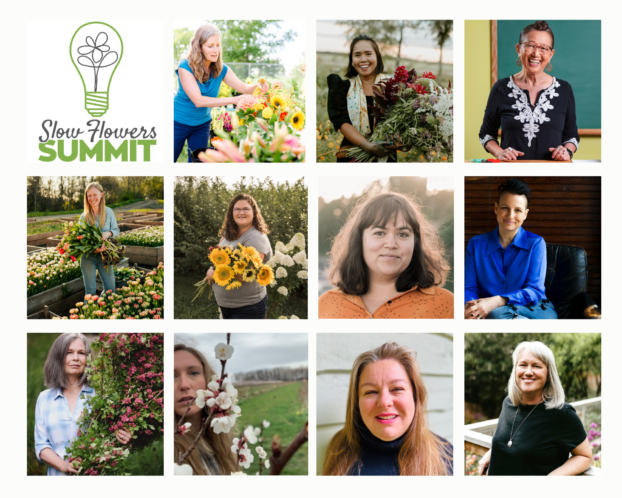
Not only are we super excited about bringing our seventh annual Slow Flowers Summit to Canada, we’re also proud to announce that all of our speakers are Canadian-based Slow Flowers members, designers and flower farmers, and Canadian sustainability experts.
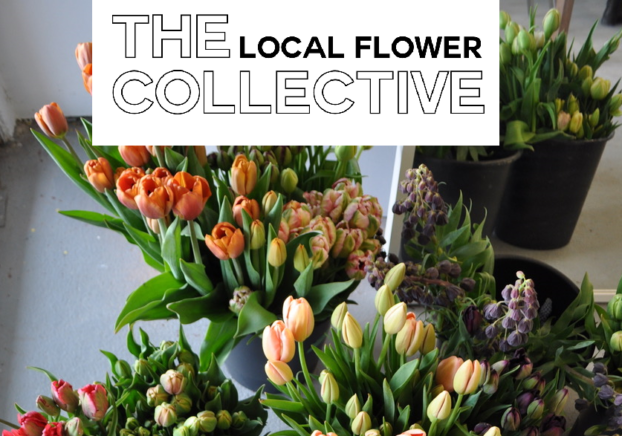
The new film series includes a short feature about the important Toronto-based flower hub, The Local Flower Collective
One of our speakers is longtime Slow Flowers member Jaime Reeves, a Toronto-based floral designer who five years ago co-founded The Local Flower Collective. A wedding and event florist, Jaime owns Leaf & Bloom, a design studio that specializes in weddings and events. At the time of the founding of The Local Flower Collective, she partnered with her studio-mate Carrie Fisher of Roadside Florist.
Proud to feature all Canadian Speakers
Top row: Heather Henson, Lourdes Still, and Hitomi Gilliam Middle row: Melanie Harrington, Janis Harris, Latifa Pelletier-Ahmed, and Cynthia Zamaria Bottom row: Lorna Jackson, Jaimie Reeves, Cara Scott and Becky Feasby
Carrie is no longer involved with the project, but so many others are! Today, you’ll meet Jaimie and enjoy a preview of a panel presentation at the Slow Flowers Summit. The panel will cover collective and cooperative flower selling and features Jaimie along with Lorna Jackson and Carrie Scott of Island Flower Growers in Victoria, B.C.
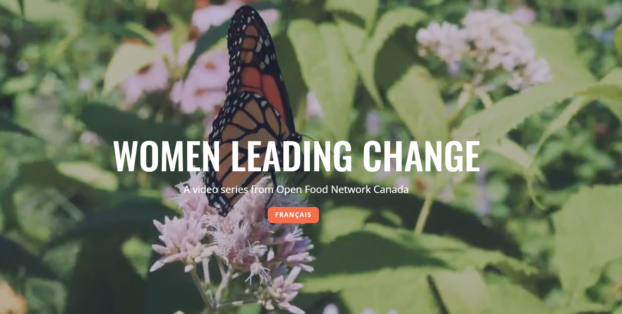
A few weeks ago, I accelerated plans to bring on Jaimie as a Slow Flowers Podcast guest when Open Food Network Canada reached out to share news of their documentary series featuring a film about The Local Flower Collective. I wanted to learn more about OFN’s new series, “Women Leading Change,” and its first film in the series, about The Local Flower Collective.
Women Leading Change includes video profiles celebrating the role that women entrepreneurs and grassroots organizers are playing in building sustainable food and farming systems in communities across Canada. From rural farmers’ markets, to urban buying clubs and coops, the series explores how digital technologies are supporting the formation of regional distribution hubs that help farmers and consumers connect in new ways. Funding for this project was provided by Agriculture and Agri-Food Canada through the AgriCommunication Program.
The first episode of Women Leading Change focuses on The Local Flower Collective, a specialty cut flower hub that supports ecological flower growers and high-end floral designers into a thriving short-chain distribution network. The film introduces The Collective and six of its flower farms. OFN will release four additional videos in this series and you can find out more details about that in our show notes as well.
Let’s jump right in and hear all about it. We’ll first meet David Thomas, executive director of Open Food Network Canada, a non-profit and social purpose organization dedicated to food and farming system change. We’ll also hear from filmmaker Craig Conoley of CELLebrate, who produced the video series before we watch the five-minute film (if you’re a podcast listener, you will hear the film audio).
The second half of this show is devoted to my conversation with Jaimie Reeves as we discuss The Local Flower Collective. I know you’ll love this episode as much as I do!
A bit more about Jaimie Reeves:
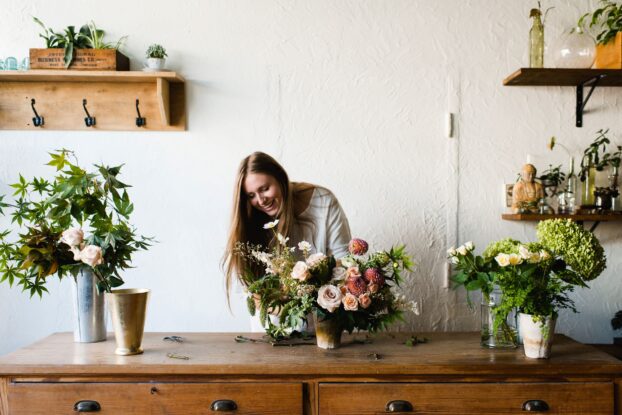
Jaimie Reeves of The Local Flower Collective
Leaf & Bloom is based in Toronto and specializes in natural floral design for weddings and events. Jaimie Reeves’ deep appreciation for nature and its seasons are prevalent in all her designs. Carefully choosing colours and hand-picking textures and foliage to compliment and reflect nature’s inherent beauty. With a focus on using locally grown blooms paired with untamed foraged elements, her compositions have a natural and effortless-looking style.
Jaimie grew up working in a family-owned garden centre where she began her career as a florist. With over 14 years of experience as a floral designer, she continues to learn and grow her craft. She strives to make every design unique while maintaining an uncomplicated aesthetic.
Are you coming to Banff for the 2024 Slow Flowers Summit?! You’ll enjoy meeting Jaimie Reeves in person and hear her panel presentation with Lorna and Carrie, as they discuss their journeys, the decisions that led to their format, and the benefits that collective flower hubs bring to the floral communities they serve. There’s still time to reserve your discounted ticket and take advantage of Early Bird Registration rate! You’ll save $100 off your Slow Flowers Summit registration, now through December 31st. I can’t wait to see you in Banff, Alberta, Canada – June 23-25, 2024.
This show is brought to you by Slowflowers.com, the free, online directory to more than 750 florists, shops, and studios who design with local, seasonal and sustainable flowers and to the farms that grow those blooms. It’s the conscious choice for buying and sending flowers.
Thank you to our lead sponsor, Farmgirl Flowers. Farmgirl Flowers delivers iconic burlap-wrapped bouquets and lush, abundant arrangements to customers across the U.S., supporting U.S. flower farms by purchasing more than $10 million dollars of U.S.-grown fresh and seasonal flowers and foliage annually. Discover more at farmgirlflowers.com.
Thank you to the Seattle Wholesale Growers Market, a farmer-owned cooperative committed to providing the very best the Pacific Northwest has to offer in cut flowers, foliage and plants. The Growers Market’s mission is to foster a vibrant marketplace that sustains local flower farms and provides top-quality products and service to the local floral industry. Visit them at Swgmc.coop.
Thank you to Longfield Gardens, which provides home gardeners with high quality flower bulbs and perennials. Their online store offers plants for every region and every season, from tulips and daffodils to dahlias, caladiums and amaryllis. Check out the full catalog at Longfield Gardens at longfield-gardens.com.
Thank you to Rooted Farmers. Rooted Farmers works exclusively with local growers to put the highest-quality specialty cut flowers in floral customers’ hands. When you partner with Rooted Farmers, you are investing in your community, and you can expect a commitment to excellence in return. Learn more at RootedFarmers.com
I love all this floral goodness and I am so happy you joined me today! The Slow Flowers Podcast is a member-supported endeavor, downloaded more than one million times by listeners like you. Thank you for listening, commenting and sharing – it means so much. As our movement gains more supporters and more passionate participants who believe in the importance of our domestic cut flower industry, the momentum is contagious. I know you feel it, too. If you’re new to our weekly Show and our long-running Podcast, check out all of our resources at SlowFlowersSociety.com
Thank you for listening! Sending love, from my cutting garden to you! (c) Missy Palacol Photography
I’m Debra Prinzing, host and producer of the Slow Flowers Show & Podcast. The Slow Flowers Podcast is engineered and edited by Andrew Brenlan. The content and opinions expressed here are either mine alone or those of my guests alone, independent of any podcast sponsor or other person, company or organization. Next week, you’re invited to join me in putting more Slow Flowers on the table, one stem, one vase at a time. Thanks so much for joining us today and I’ll see you next week!