The Slow Flowers Podcast is the award-winning show known as the “Voice of the Slow Flowers Movement.” Launched in 2013 as the original flower podcast, we’ve devoted more than 10 years to covering the business of flower farming, floral design, and the Slow Flowers sustainability ethos. Listen to a new episode each Wednesday, available for free download here at slowflowerspodcast.com or on iTunes, Spotify, and other podcast platforms.
If you’re a regular listener, you’ve heard the announcement about our first ever international Slow Flowers Summit heading to Banff, Alberta, Canada in June 2024.
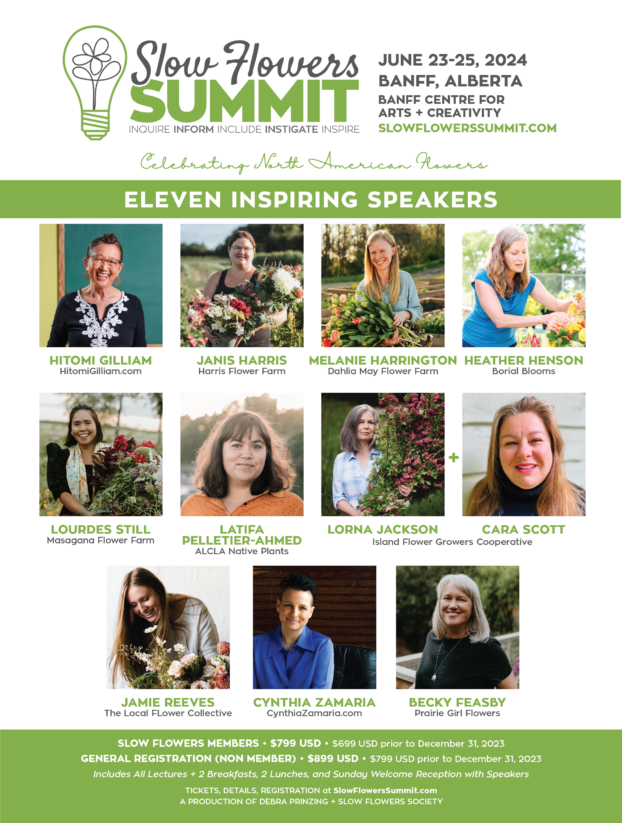
Not only are we super excited about bringing our seventh annual Slow Flowers Summit to Canada, we’re also proud to announce that all of our speakers are Canadian-based Slow Flowers members, designers and flower farmers, and Canadian sustainability experts.
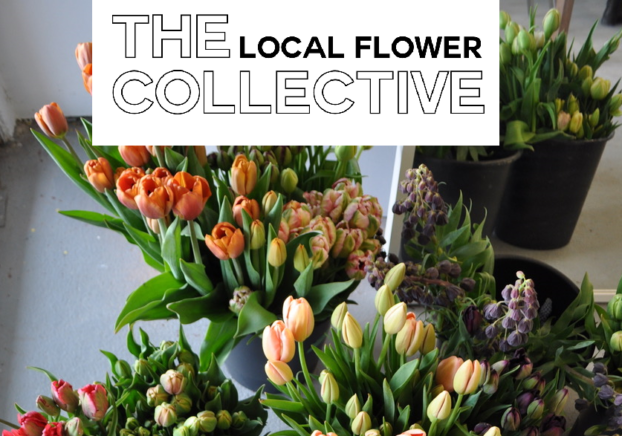
The new film series includes a short feature about the important Toronto-based flower hub, The Local Flower Collective
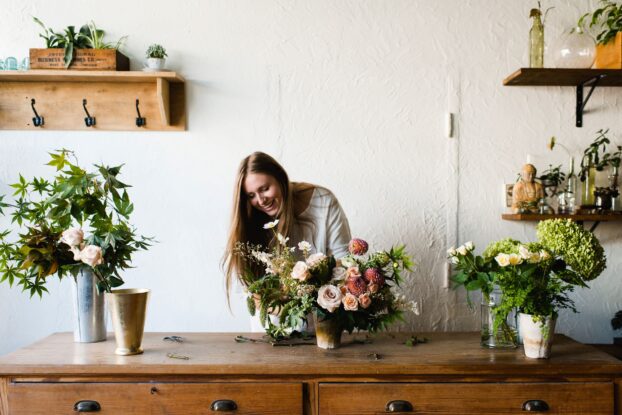
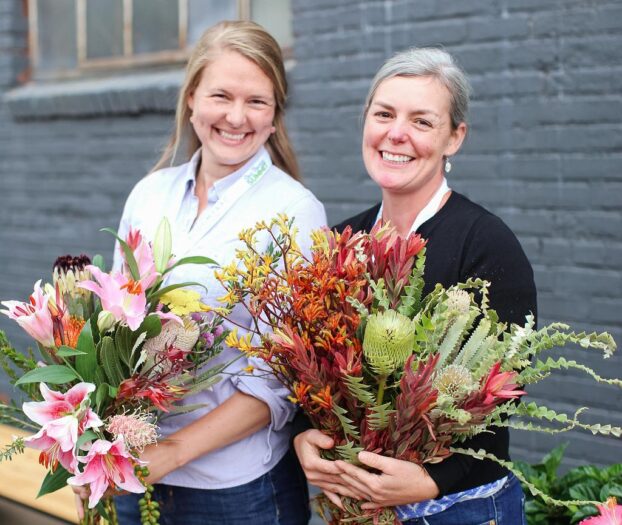
One of our speakers is longtime Slow Flowers member Jaime Reeves, a Toronto-based floral designer who five years ago co-founded The Local Flower Collective. A wedding and event florist, Jaime owns Leaf & Bloom, a design studio that specializes in weddings and events. At the time of the founding of The Local Flower Collective, she partnered with her studio-mate Carrie Fisher of Roadside Florist.
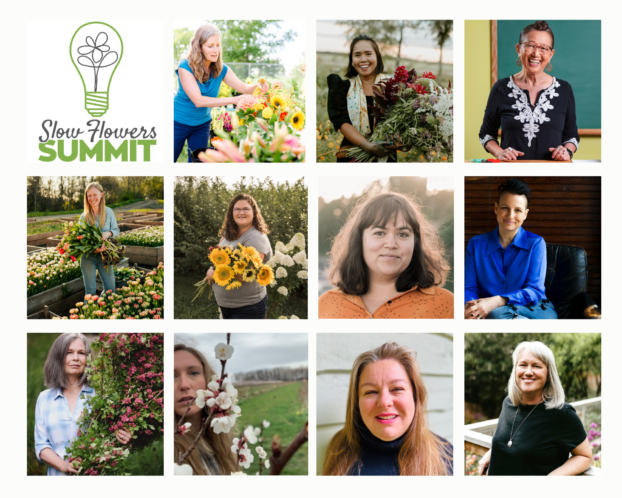
Proud to feature all Canadian Speakers
Top row: Heather Henson, Lourdes Still, and Hitomi Gilliam Middle row: Melanie Harrington, Janis Harris, Latifa Pelletier-Ahmed, and Cynthia Zamaria Bottom row: Lorna Jackson, Jaimie Reeves, Cara Scott and Becky Feasby
Carrie is no longer involved with the project, but so many others are! Today, you’ll meet Jaimie and enjoy a preview of a panel presentation at the Slow Flowers Summit. The panel will cover collective and cooperative flower selling and features Jaimie along with Lorna Jackson and Carrie Scott of Island Flower Growers in Victoria, B.C.
A few weeks ago, I accelerated plans to bring on Jaimie as a Slow Flowers Podcast guest when Open Food Network Canada reached out to share news of their documentary series featuring a film about The Local Flower Collective. I wanted to learn more about OFN’s new series, “Women Leading Change,” and its first film in the series, about The Local Flower Collective.
Women Leading Change includes video profiles celebrating the role that women entrepreneurs and grassroots organizers are playing in building sustainable food and farming systems in communities across Canada. From rural farmers’ markets, to urban buying clubs and coops, the series explores how digital technologies are supporting the formation of regional distribution hubs that help farmers and consumers connect in new ways. Funding for this project was provided by Agriculture and Agri-Food Canada through the AgriCommunication Program.
The first episode of Women Leading Change focuses on The Local Flower Collective, a specialty cut flower hub that supports ecological flower growers and high-end floral designers into a thriving short-chain distribution network. The film introduces The Collective and six of its flower farms. OFN will release four additional videos in this series and you can find out more details about that in our show notes as well.
Let’s jump right in and hear all about it. We’ll first meet David Thomas, executive director of Open Food Network Canada, a non-profit and social purpose organization dedicated to food and farming system change. We’ll also hear from filmmaker Craig Conoley of CELLebrate, who produced the video series before we watch the five-minute film (if you’re a podcast listener, you will hear the film audio).
The second half of this show is devoted to my conversation with Jaimie Reeves as we discuss The Local Flower Collective. I know you’ll love this episode as much as I do!
A bit more about Jaimie Reeves:
Jaimie Reeves of The Local Flower Collective
Leaf & Bloom is based in Toronto and specializes in natural floral design for weddings and events. Jaimie Reeves’ deep appreciation for nature and its seasons are prevalent in all her designs. Carefully choosing colours and hand-picking textures and foliage to compliment and reflect nature’s inherent beauty. With a focus on using locally grown blooms paired with untamed foraged elements, her compositions have a natural and effortless-looking style.
Jaimie grew up working in a family-owned garden centre where she began her career as a florist. With over 14 years of experience as a floral designer, she continues to learn and grow her craft. She strives to make every design unique while maintaining an uncomplicated aesthetic.
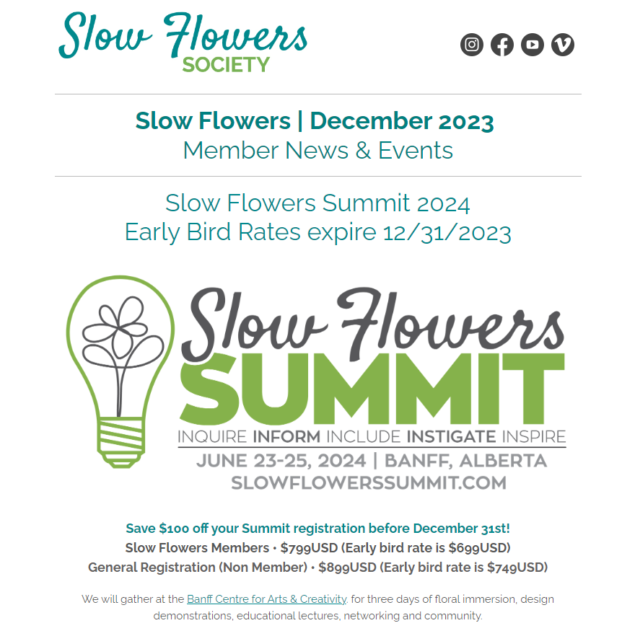
Are you coming to Banff for the 2024 Slow Flowers Summit?! You’ll enjoy meeting Jaimie Reeves in person and hear her panel presentation with Lorna and Carrie, as they discuss their journeys, the decisions that led to their format, and the benefits that collective flower hubs bring to the floral communities they serve. There’s still time to reserve your discounted ticket and take advantage of Early Bird Registration rate! You’ll save $100 off your Slow Flowers Summit registration, now through December 31st. I can’t wait to see you in Banff, Alberta, Canada – June 23-25, 2024.
This show is brought to you by Slowflowers.com, the free, online directory to more than 750 florists, shops, and studios who design with local, seasonal and sustainable flowers and to the farms that grow those blooms. It’s the conscious choice for buying and sending flowers.
Thank you to our lead sponsor, Farmgirl Flowers. Farmgirl Flowers delivers iconic burlap-wrapped bouquets and lush, abundant arrangements to customers across the U.S., supporting U.S. flower farms by purchasing more than $10 million dollars of U.S.-grown fresh and seasonal flowers and foliage annually. Discover more at farmgirlflowers.com.
Thank you to the Seattle Wholesale Growers Market, a farmer-owned cooperative committed to providing the very best the Pacific Northwest has to offer in cut flowers, foliage and plants. The Growers Market’s mission is to foster a vibrant marketplace that sustains local flower farms and provides top-quality products and service to the local floral industry. Visit them at Swgmc.coop.
Thank you to Longfield Gardens, which provides home gardeners with high quality flower bulbs and perennials. Their online store offers plants for every region and every season, from tulips and daffodils to dahlias, caladiums and amaryllis. Check out the full catalog at Longfield Gardens at longfield-gardens.com.
Thank you to Rooted Farmers. Rooted Farmers works exclusively with local growers to put the highest-quality specialty cut flowers in floral customers’ hands. When you partner with Rooted Farmers, you are investing in your community, and you can expect a commitment to excellence in return. Learn more at RootedFarmers.com
I love all this floral goodness and I am so happy you joined me today! The Slow Flowers Podcast is a member-supported endeavor, downloaded more than one million times by listeners like you. Thank you for listening, commenting and sharing – it means so much. As our movement gains more supporters and more passionate participants who believe in the importance of our domestic cut flower industry, the momentum is contagious. I know you feel it, too. If you’re new to our weekly Show and our long-running Podcast, check out all of our resources at SlowFlowersSociety.com
Thank you for listening! Sending love, from my cutting garden to you! (c) Missy Palacol Photography
I’m Debra Prinzing, host and producer of the Slow Flowers Show & Podcast. The Slow Flowers Podcast is engineered and edited by Andrew Brenlan. The content and opinions expressed here are either mine alone or those of my guests alone, independent of any podcast sponsor or other person, company or organization. Next week, you’re invited to join me in putting more Slow Flowers on the table, one stem, one vase at a time. Thanks so much for joining us today and I’ll see you next week!
Today’s episode is like a floral runway show for growers and designers alike and you’ll be wowed by the new flower seed introductions for 2024, revealed by Hillary Alger and Joy Longfellow of Johnny’s Selected Seeds.
Flower experts Joy Longfellow and Hilary Alger of Johnny’s Seeds
We are so happy to have had such a long relationship with Johnny’s Seeds as a content partner and sponsor of the Slow Flowers movement. And at this time of year, gardeners and flower farmers alike anticipate the arrival of Johnny’s new catalog of seeds – seeds for backyard cutting gardens like mine and for larger acreage of our flower farmers who grow in rows, high tunnels, and greenhouses.
We invited Joy and Hillary, Johnny’s Seeds’ floral experts, to introduce new flower seed varieties for 2024! Hillary and Joy recently shared new blooms for farms and gardens in a Johnny’s webinar. During last week’s Slow Flowers Meet-Up for members, they took us behind the scenes to hear more about the dazzling, colorful selection of floral varieties and mixes available for 2024.
We recorded the session to share with you on video and audio, so you’ll want to get out your pens and paper to take notes. Learn why their favorite standouts are worth considering as we discuss growing cut flowers from seeds.
Hillary Alger has over 12 years of experience on Johnny’s Seeds’ research team. She is currently the Product Manager for flowers and herbs. Joy Longfellow is the Flower Team Technician at Johnny’s, managing every aspect of Johnny’s flower trialing program.
Links and more resources: Johnny’s November New Flower Seeds webinar/A PDF of the slide presentation are here.
Are you coming to Banff for the 2024 Slow Flowers Summit?! There’s not much time left to reserve your discounted ticket and take advantage of Early Bird Registration rate! You’ll save $100 off your Slow Flowers Summit registration, now through December 31st. I can’t wait to see you in Banff, Alberta, Canada – June 23-25, 2024.
This show is brought to you by Slowflowers.com, the free, online directory to more than 750 florists, shops, and studios who design with local, seasonal and sustainable flowers and to the farms that grow those blooms. It’s the conscious choice for buying and sending flowers.
Thank you to our lead sponsor, Farmgirl Flowers. Farmgirl Flowers delivers iconic burlap-wrapped bouquets and lush, abundant arrangements to customers across the U.S., supporting U.S. flower farms by purchasing more than $10 million dollars of U.S.-grown fresh and seasonal flowers and foliage annually. Discover more at farmgirlflowers.com.
Thank you to CalFlowers, the leading floral trade association in California, providing valuable transportation and other benefits to flower growers and the entire floral supply chain in California and 48 other states. The Association is a leader in bringing fresh cut flowers to the U.S. market and in promoting the benefits of flowers to new generations of American consumers. Learn more at cafgs.org.
Thank you goes to Store It Cold, creators of the revolutionary CoolBot, a popular solution for flower farmers, studio florists and farmer-florists. Save $1000s when you build your own walk-in cooler with the CoolBot and an air conditioner. Don’t have time to build your own? They also have turnkey units available. Learn more at storeitcold.com.
Thank you goes to Red Twig Farms. Based in Johnstown, Ohio, Red Twig Farms is a family-owned farm specializing in peonies, daffodils, tulips and branches, a popular peony-bouquet-by-mail program and their Spread the Hope Campaign where customers purchase 10 tulip stems for essential workers and others in their community. Learn more at redtwigfarms.com.
I love all this floral goodness and I am so happy you joined me today! The Slow Flowers Podcast is a member-supported endeavor, downloaded more than one million times by listeners like you. Thank you for listening, commenting and sharing – it means so much. As our movement gains more supporters and more passionate participants who believe in the importance of our domestic cut flower industry, the momentum is contagious. I know you feel it, too. If you’re new to our weekly Show and our long-running Podcast, check out all of our resources at SlowFlowersSociety.com
Thank you for listening! Sending love, from my cutting garden to you! (c) Missy Palacol Photography
I’m Debra Prinzing, host and producer of the Slow Flowers Show & Podcast. The Slow Flowers Podcast is engineered and edited by Andrew Brenlan. The content and opinions expressed here are either mine alone or those of my guests alone, independent of any podcast sponsor or other person, company or organization. Next week, you’re invited to join me in putting more Slow Flowers on the table, one stem, one vase at a time. Thanks so much for joining us today and I’ll see you next week!
Music credits:
Vienna Beat; Drone Pine; Turning on the Lights; Gaena by Blue Dot Sessions http://www.sessions.blue
This week we’re learning about how one grower has managed her first five flower farming years. Kristen Rubin of Sweetwater Stem Co., in Gig Harbor, Washington, will share how she found sales channels for her blooms at a time when local farmers’ markets were closed due to the Pandemic. Kristen and her husband Allan bought what she describes as a vintage, 8-acre farm in 2019, previously home to highland cattle, when she relocated to her home state of Washington after living in Anchorage, Alaska for a brief period. They chose the name Sweetwater Stem Co. to honor Kristen’s family legacy. Her great grandfather arrived in Idaho at the turn of the century as a pioneer and founded the town of Sweetwater.
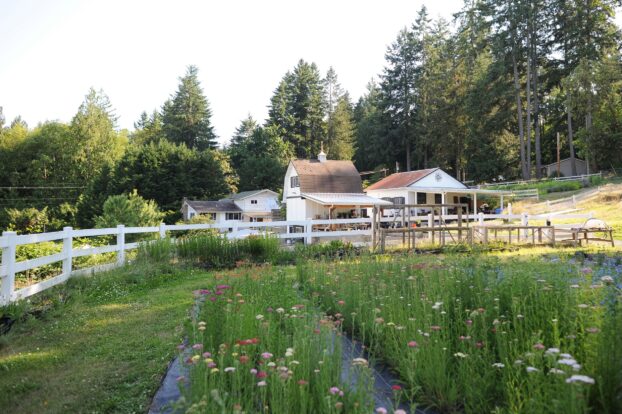
Sweetwater Stem Co. Gig Harbor, Washington
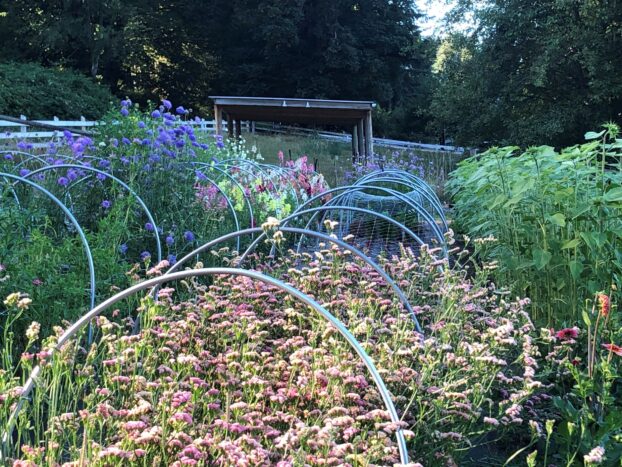
Sweetwater Stem Co. field crops
The new farm’s location in Gig Harbor’s Ray Nash Valley became the idyllic spot to put into practice their philosophy of sustainable organic farming. They use minimal till practices and broad-fork their beds to maintain healthy soil biome. Beneficial insects are released during the growing season to guard against pests and non-chemical methods are used to sustain plant health. They use fish fertilizer and brew compost tea to foliar feed by spraying plants weekly to help create an ideal environment for healthy plants and to attract pollinators to their safe haven.
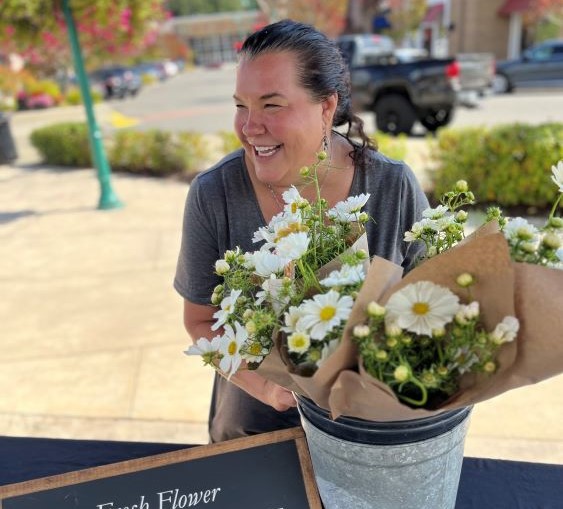
Sweetwater Stem Co.’s market bouquets
Sweetwater Stem Co. grows a variety of flowers and foliage throughout the year, including old-fashioned favorites like zinnias, lisianthus, snapdragons and dahlias, as well as early spring bulb crops like tulips and ranunculus.
Gig Harbor Flower Farmers’ Guild
In the second half of our conversation, Kristen will share the news of the Gig Harbor Flower Farmers Guild, a cohort of several are growers formed about one year ago to operate a weekly direct-to-consumer flower market and a specialty wholesale-to-florists hub. Still in the development stage, the guild has talent, creativity, and a vision to bring more local flowers to their community – and you’ll be inspired by their plans.
Our Slow Flowers December newsletter dropped last week and you can find the link in today’s show notes. It’s packed with great content, resources, stories, and flowers.
Remember to grab your ticket to the 2024 Slow Flowers Summit – there’s just three weeks left to take advantage of Early Bird Registration rate! You’ll save $100 Off your Slow Flowers Summit registration, now through December 31st. We can’t wait to see you in Banff, Alberta, Canada – June 23-25, 2024.
Flower experts Joy Longfellow and Hilary Alger of Johnny’s Seeds
And this Friday is the final Slow Flowers Member Meet-Up for the year – Friday, December 8th at 9 am Pacific/Noon Eastern. Our meet-up guests – Hillary Alger and Joy Longfellow of Johnny’s Seeds – will share a preview of the dazzling new flower seed introductions for 2024 – and we might even have some seed giveaways! Preregistration is Required. Click the link below to sign up!
This show is brought to you by Slowflowers.com, the free, online directory to more than 750 florists, shops, and studios who design with local, seasonal and sustainable flowers and to the farms that grow those blooms. It’s the conscious choice for buying and sending flowers.
Thank you to our lead sponsor, Farmgirl Flowers. Farmgirl Flowers delivers iconic burlap-wrapped bouquets and lush, abundant arrangements to customers across the U.S., supporting U.S. flower farms by purchasing more than $10 million dollars of U.S.-grown fresh and seasonal flowers and foliage annually. Discover more at farmgirlflowers.com.
Thank you to Johnny’s Selected Seeds, an employee-owned company that provides our industry the best flower, herb and vegetable seeds — supplied to farms large and small and even backyard cutting gardens like mine. Find the full catalog of flower seeds and bulbs at johnnysseeds.com.
Thank you to Mayesh Wholesale Florist. Family-owned since 1978, Mayesh is the premier wedding and event supplier in the U.S. and we’re thrilled to partner with Mayesh to promote local and domestic flowers, which they source from farms large and small around the U.S. Learn more at mayesh.com.
Thank you to The Gardener’s Workshop, which offers a full curriculum of online education for flower farmers and farmer-florists. Online education is more important than ever, and you’ll want to check out the course offerings at thegardenersworkshop.com.
I love all this floral goodness and I am so happy you joined me today! The Slow Flowers Podcast is a member-supported endeavor, downloaded more than one million times by listeners like you. Thank you for listening, commenting and sharing – it means so much. As our movement gains more supporters and more passionate participants who believe in the importance of our domestic cut flower industry, the momentum is contagious. I know you feel it, too. If you’re new to our weekly Show and our long-running Podcast, check out all of our resources at SlowFlowersSociety.com
Thank you for listening! Sending love, from my cutting garden to you! (c) Missy Palacol Photography
I’m Debra Prinzing, host and producer of the Slow Flowers Show & Podcast. The Slow Flowers Podcast is engineered and edited by Andrew Brenlan. The content and opinions expressed here are either mine alone or those of my guests alone, independent of any podcast sponsor or other person, company or organization. Next week, you’re invited to join me in putting more Slow Flowers on the table, one stem, one vase at a time. Thanks so much for joining us today and I’ll see you next week!
Music credits:
These Times (alternate take); Drone Pine; Turning on the Lights; Gaena by Blue Dot Sessions http://www.sessions.blue
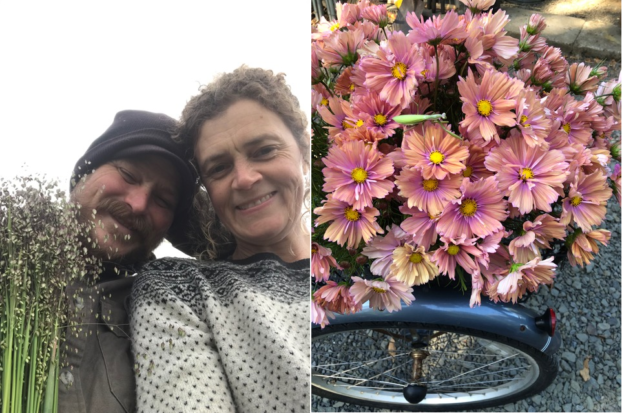
The Slow Flowers Podcast is grateful to the Seattle Wholesale Growers Market for its longtime support — and today’s episode underscores our relationship. From its beginnings in 2010, when a group of local flower farmers hatched up the idea of starting a wholesale hub for local flowers here in Seattle, my storytelling has been intertwined with their stories. My guests today are part of that narrative. Please join me on a visit to Field to Heart owned by Danielle (Dee) Swan and Valiant Poole.
Valiant Poole (left) and Dee Swan (right) of Field to Heart
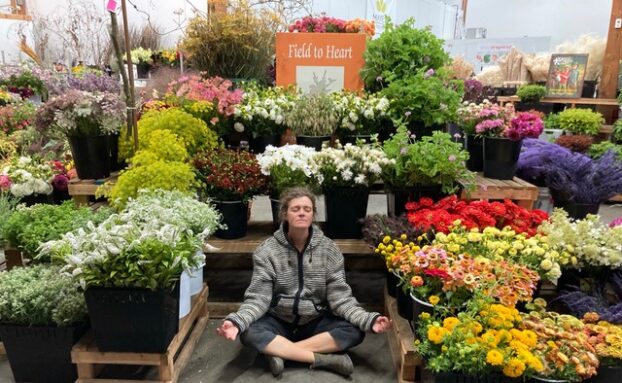
Danielle (Dee) Swan at Seattle Wholesale Growers Market’s Field to Heart product display
When I first me this couple, they were based in Snohomish, an agricultural county located about 30 minutes north of Seattle. Both have an extensive background in the arts, horticulture, fine gardening, and organic landscape maintenance. They apply this experience and passion to providing sustainably grown, chemical free, high-quality flowers to florists in the Pacific Northwest.
In 2018, Dee and Valiant relocated Field to Heart to Curtis, Washington, to a new home and acreage located west of Centralia. The area is known as the center point, about 90 miles in either direction between Seattle and Portland, which has allowed Field to Heart to also supply Portland area florists who shop at the Oregon Flower Growers Association, also a Slow Flowers member, located at the Portland Flower Market.
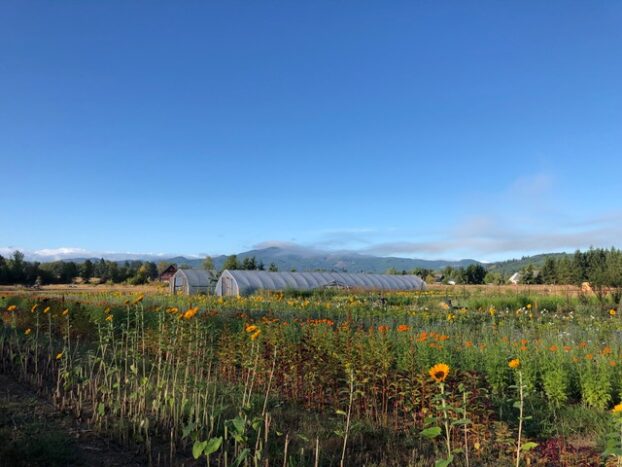
The view from Field to Heart
Earlier this month, I had a trip to the Washington coast planned with a friend, and in looking at the map for my return to Seattle, I realized that we were due west of Field to Heart. I have always loved the botanicals that Dee and Valiant grow and I basically invited myself to visit them on my drive home. When she emailed me back, Dee wrote: “We’d love to show you around Field to Heart! We should be here all day on Saturday making wreaths…being farmers it’s hard to get away even in the off season.”
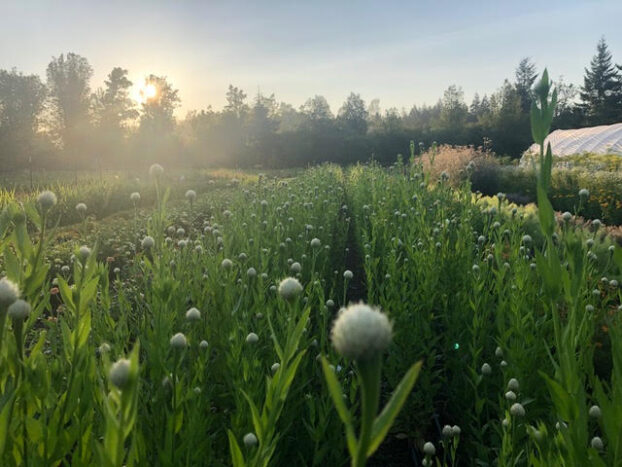
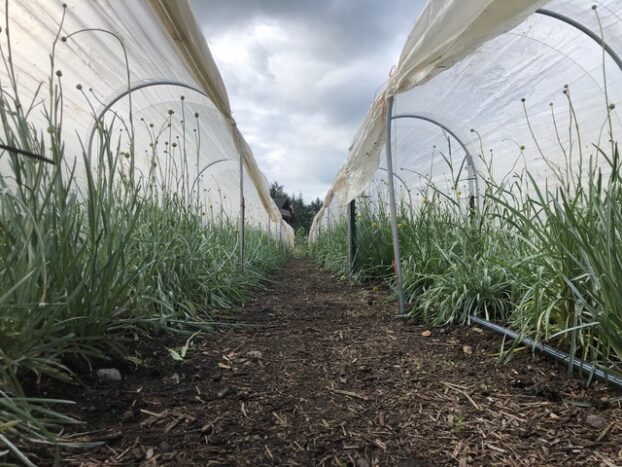
Low Tunnels with Craspedia globosa
I brought my camera and started filming the minute I arrived. You’ll see inside the high tunnels, the low tunnels, and spent time as I chat with Dee and Valiant on their porch. In preparation for their winter wreath and garland production, the porch is converted into an outside studio filled with greenery and other design elements. It’s also the location of the wreathing workshops they host during December.
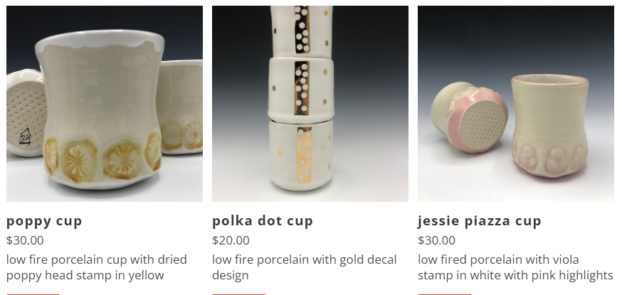
Pottery by Dee Swan of Field to Heart
I also wanted to mention that you can find Dee’s handmade pottery mugs and vases on the Field to Heart website and at the Seattle Wholesale Growers Market. I love her sentiments: “We often wonder if we are farmers with the eyes of an artist or artists with a farmers’ touch. We are educated in both and strive to create our lives around both disciplines, whether it be plant identification to painting, music to ‘garden-nerding’ or ceramics to soil health. It’s all intertwined.”
Here in the U.S., we’ve just finished a nice, long, four-day Thanksgiving weekend, followed on Monday, November 27th by Cyber Monday. While Slow Flowers isn’t jumping on that bandwagon this year, we do want to remind you that there’s still time to grab your ticket to the 2024 Slow Flowers Summit and take advantage of Early Bird Registration rate! You’ll save $100 off your Slow Flowers Summit registration, now through December 31st. I can’t wait to see you in Banff, Alberta, Canada – June 23-25, 2024.
This show is brought to you by Slowflowers.com, the free, online directory to more than 750 florists, shops, and studios who design with local, seasonal and sustainable flowers and to the farms that grow those blooms. It’s the conscious choice for buying and sending flowers.
Thank you to our lead sponsor, Farmgirl Flowers. Farmgirl Flowers delivers iconic burlap-wrapped bouquets and lush, abundant arrangements to customers across the U.S., supporting U.S. flower farms by purchasing more than $10 million dollars of U.S.-grown fresh and seasonal flowers and foliage annually. Discover more at farmgirlflowers.com.
Thank you to Seattle Wholesale Growers Market, a farmer-owned cooperative committed to providing the very best the Pacific Northwest has to offer in cut flowers, foliage and plants. The Growers Market’s mission is to foster a vibrant marketplace that sustains local flower farms and provides top-quality products and service to the local floral industry. Visit them at seattlewholesalegrowersmarket.com.
Thank you to Longfield Gardens, which provides home gardeners with high quality flower bulbs and perennials. Their online store offers plants for every region and every season, from tulips and daffodils to dahlias, caladiums and amaryllis. Check out the full catalog at Longfield Gardens at longfield-gardens.com.
Thank you to Rooted Farmers. Rooted Farmers works exclusively with local growers to put the highest-quality specialty cut flowers in floral customers’ hands. When you partner with Rooted Farmers, you are investing in your community, and you can expect a commitment to excellence in return. Learn more at RootedFarmers.com.
I love all this floral goodness and I am so happy you joined me today! The Slow Flowers Podcast is a member-supported endeavor, downloaded more than one million times by listeners like you. Thank you for listening, commenting and sharing – it means so much. As our movement gains more supporters and more passionate participants who believe in the importance of our domestic cut flower industry, the momentum is contagious. I know you feel it, too. If you’re new to our weekly Show and our long-running Podcast, check out all of our resources at SlowFlowersSociety.com
Thank you for listening! Sending love, from my cutting garden to you! (c) Missy Palacol Photography
I’m Debra Prinzing, host and producer of the Slow Flowers Show & Podcast. The Slow Flowers Podcast is engineered and edited by Andrew Brenlan. The content and opinions expressed here are either mine alone or those of my guests alone, independent of any podcast sponsor or other person, company or organization. Next week, you’re invited to join me in putting more Slow Flowers on the table, one stem, one vase at a time. Thanks so much for joining us today and I’ll see you next week!
Today, you’re invited to join me on a visit to Everbloom Fields, an urban flower farm located just south of downtown Dallas. Sarah Jo Eversole is the primary farmer with a little maintenance help from her husband, Matt, and their two young children are often found playing among the flowers while Sarah Jo tends to her crops.
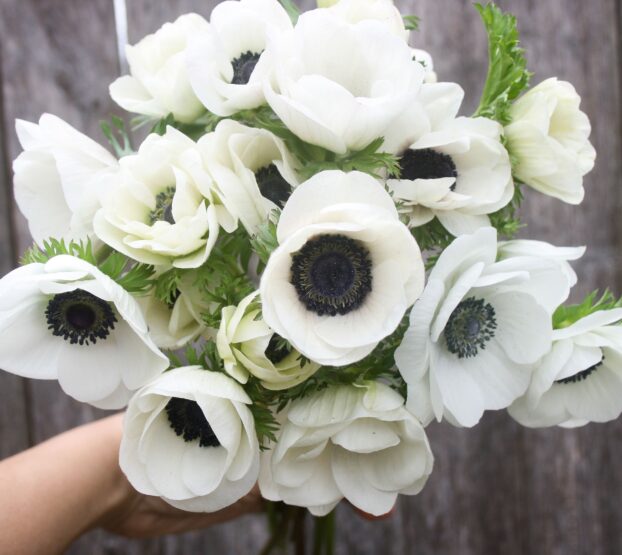
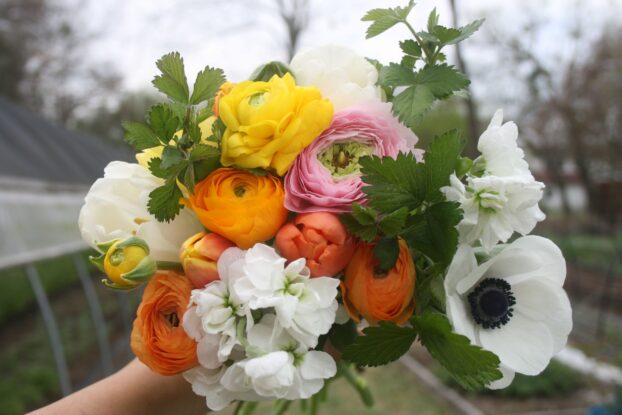
Anemones from Everbloom Fields
You’ll learn how Sarah Jo started Everbloom Fields six years ago, after working for many years as a data analyst. She blends a love of flowers and science, embracing flower farming as a new outlet for her data skills within the world of agriculture and entrepreneurship.
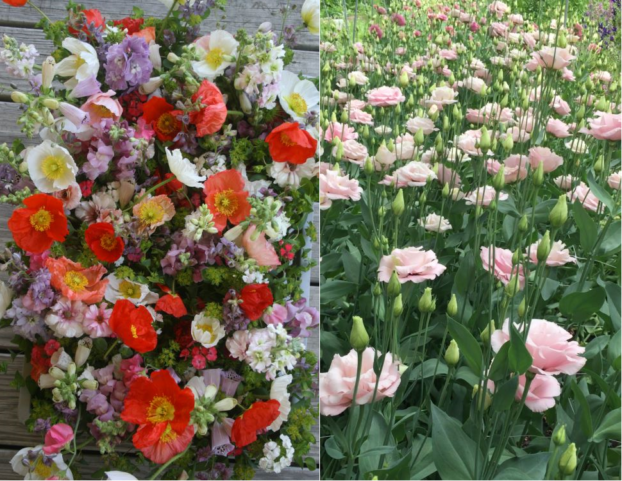
Event flowers and lisianthus
Everbloom Fields grows high quality cut flowers for Dallas and North Texas area organizations, designers and events. Sarah Jo farms using sustainable practices on a bonus lot located behind her family’s historic 1878 farmhouse. Her field crops yield thousands of flowers and her 1,700 sq. ft high tunnel extends the growing season. A native Texan, Sarah Jo loves the dirt, sunshine, and science. Please join our conversation about the challenges and rewards of growing cut flowers in Texas.
Spring flowers – the Everbloom Fields’ specialization
And you’ll learn why Sarah Jo focuses most of her energy on offering quality cut flowers primarily in the Spring season (March – May) with lighter offerings during summer and autumn.
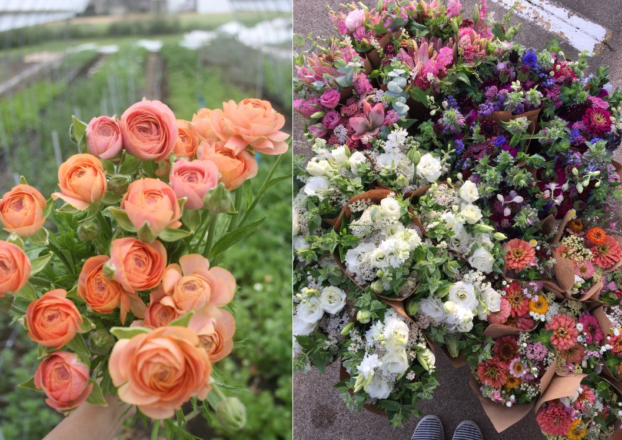
Ranunculus and Market Bouquets
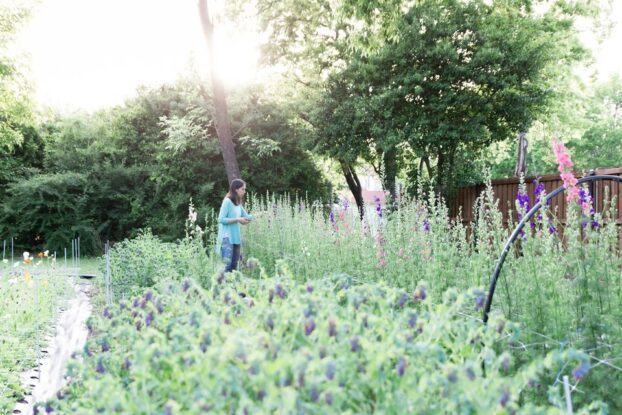
Sarah Jo Eversole in her urban micro farm at Everbloom Fields
If you’re in the U.S., you’re probably racing around getting ready for the long Thanksgiving holiday weekend. And if you’re a Slow Flowers member, keep an eye out for our Thankful for You package of marketing resources and exclusive content just for you – it will land in your in-box today, November 22, 2023, as a celebration of our Member Appreciation Month. We’ve collected a bounty to share with you, including new social media badges, the updated Member Marketing Toolkit, our Autumn 2023 issue of Slow Flowers Journal digital e-zine, and the 1 hour/50 minute video of Shane Connolly’s lecture and design demonstrations from his Seattle appearance this past September. Reach out to hello@slowflowers.com if you can’t find the email in your in-box!
See you at the Slow Flowers Summit!
Next up, there’s still time to grab your ticket to the 2024 Slow Flowers Summit and take advantage of Early Bird Registration rate! Save $100 off your Slow Flowers Summit registration, now through December 31st. I can’t wait to see you in Banff, Alberta, Canada – June 23-25, 2024.
This show is brought to you by Slowflowers.com, the free, online directory to more than 750 florists, shops, and studios who design with local, seasonal and sustainable flowers and to the farms that grow those blooms. It’s the conscious choice for buying and sending flowers.
Thank you to our lead sponsor, Farmgirl Flowers. Farmgirl Flowers delivers iconic burlap-wrapped bouquets and lush, abundant arrangements to customers across the U.S., supporting U.S. flower farms by purchasing more than $10 million dollars of U.S.-grown fresh and seasonal flowers and foliage annually. Discover more at farmgirlflowers.com.
Thank you to CalFlowers, the leading floral trade association in California, providing valuable transportation and other benefits to flower growers and the entire floral supply chain in California and 48 other states. The Association is a leader in bringing fresh cut flowers to the U.S. market and in promoting the benefits of flowers to new generations of American consumers. Learn more at cafgs.org.
Thank you to Store It Cold, creators of the revolutionary CoolBot, a popular solution for flower farmers, studio florists and farmer-florists. Save $1000s when you build your own walk-in cooler with the CoolBot and an air conditioner. Don’t have time to build your own? They also have turnkey units available. Learn more at storeitcold.com.
Thank you to Red Twig Farms. Based in Johnstown, Ohio, Red Twig Farms is a family-owned farm specializing in peonies, daffodils, tulips and branches, a popular peony-bouquet-by-mail program and their Spread the Hope Campaign where customers purchase 10 tulip stems for essential workers and others in their community. Learn more at redtwigfarms.com.
I love all this floral goodness and I am so happy you joined me today! The Slow Flowers Podcast is a member-supported endeavor, downloaded more than one million times by listeners like you. Thank you for listening, commenting and sharing – it means so much. As our movement gains more supporters and more passionate participants who believe in the importance of our domestic cut flower industry, the momentum is contagious. I know you feel it, too. If you’re new to our weekly Show and our long-running Podcast, check out all of our resources at SlowFlowersSociety.com
Thank you for listening! Sending love, from my cutting garden to you! (c) Missy Palacol Photography
I’m Debra Prinzing, host and producer of the Slow Flowers Show & Podcast. The Slow Flowers Podcast is engineered and edited by Andrew Brenlan. The content and opinions expressed here are either mine alone or those of my guests alone, independent of any podcast sponsor or other person, company or organization. Next week, you’re invited to join me in putting more Slow Flowers on the table, one stem, one vase at a time. Thanks so much for joining us today and I’ll see you next week!
Music credits:
Enter the Room; Drone Pine; Turning on the Lights; Gaena by Blue Dot Sessions http://www.sessions.blue
A conversation about the native plants and sustainable land care practices of the Canadian prairies and grasslands
Last Friday, November 10th, we held a virtual members meet-up to introduce the just-announced Slow Flowers Summit in 2024.
We shared the dates — June 23-25, 2024 — the venue, beautiful Banff Centre for Arts & Creativity in Banff, Alberta, Canada, surrounded by the Canadian Rockies, and highlights of our program.
We have eleven inspiring speakers, an extensive hands-on design immersion, and presentations on flower farming, floral design, floral entrepreneurship and sustainability. I can’t wait to see you there!
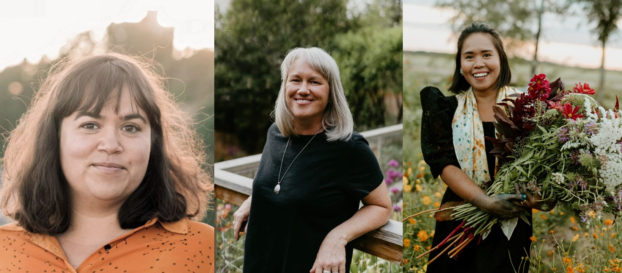
Latifa Pelletier-Ahmed, Becky Feasby, and Lourdes Still
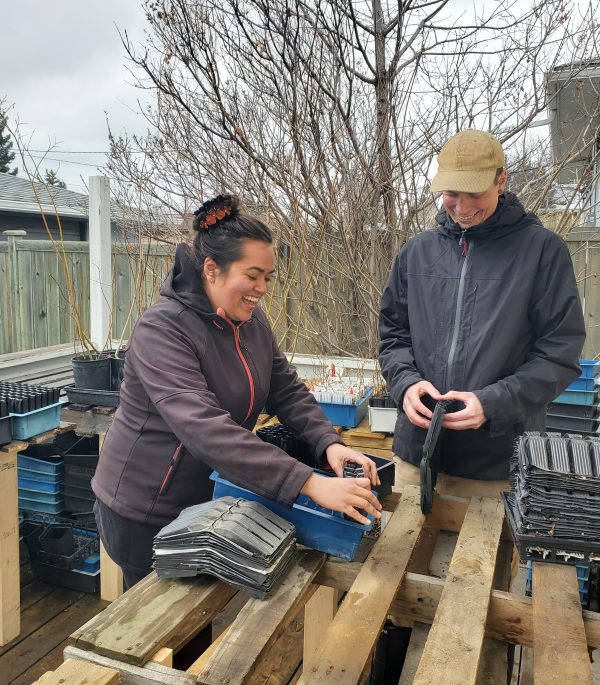
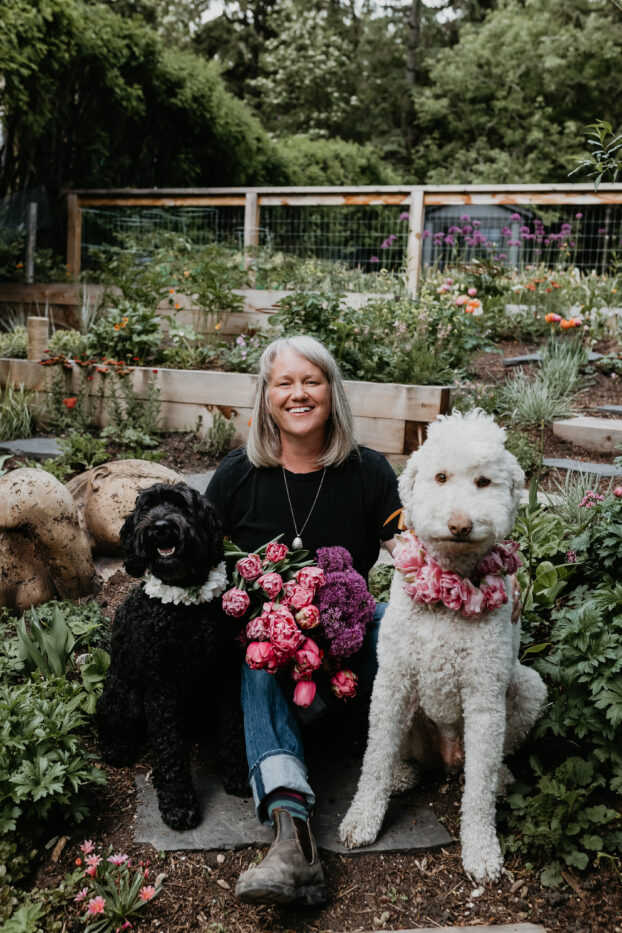
I invited two of our Summit speakers, Becky Feasby ofPrairie Girl Flowers and Latifa Pelletier-Ahmed, owner of ALCLA Native Plants, a Calgary area nursery. As a surprise bonus, Lourdes Still of Masagana Flower Farm in Manitoba, who will also present at the Slow Flowers Summit, joined our conversation.
We covered the highlights of their involvement in the world of plants, flowers, and horticulture In Canada’s prairies and grasslands – and the conversation took a wonderful turn toward sustainability and regenerative practices.
Here’s a bit more about these three women:
Latifa Pelletier-Ahmed of ALCLA Native Plants
Latifa Pelletier-Ahmed is a botanist, herbalist, educator, and artist, and is co-owner of ALCLA Native Plants a native plant nursery based in Treaty 7 Territory, near Calgary, Alberta, Canada. She holds a BSc in Botany from the University of Calgary and an MSc in Herbal Medicine from Middlesex University, London, UK. She has been working with native plants for 15 years and her expertise includes identification, sustainable collection, cultivation, and ethnobotany.
In 2016 she founded Latifa’s Herbs, which primarily serves to educate the public on the edible and medicinal uses of wild plant species in both Alberta and British Columbia. Latifa is a former faculty member at Pacific Rim College in Victoria, BC where she taught Botany and Horticulture in addition to Wild Plant Nutrition.
Becky Feasby, Prairie Girl Flowers
Becky Feasby completed her gardening and landscape design training in New York, Calgary, and Chicago and has completed floral design training with many leading florists who specialize in environmental-friendly floristry and who support the Slow Flowers movement.
She previously worked as the Horticultural Therapist at the Alberta Children’s Hospital, where she oversaw the design and management of five acres of gardens. In creating prairie girl flowers, she wanted to utilize all of her training to bring sustainable beauty to Calgarians – and to cultivate a change in the floral industry. A change that makes florals better for the planet and creates opportunities for clients to make a conscious choice that supports local growers and our environment.
Becky is currently working towards her Master degree in Sustainability at Harvard University – because sustainability is not only the focus of our work, but also the reason for our existence: to create a sustainable floral business in Calgary that maintains the environmental, social, and economic integrity of the floral industry.
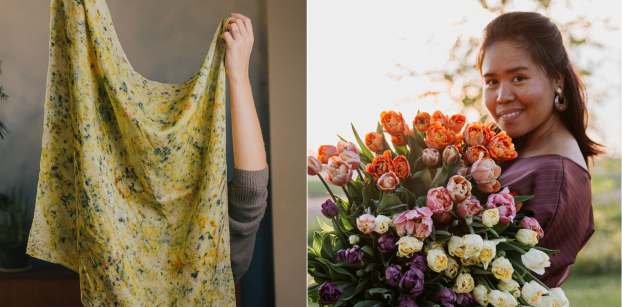
Lourdes Still is the owner of Masagana Flower Farm & Studio in southeast Manitoba. She grows and interacts with plants and flowers as natural dye sources, and juggles the roles of a flower grower, a natural dyer, and an experiential tourism guide at her farm. In her flagship offering, the Tinta Experience, Lourdes started as a self-taught flower grower, natural dyer, and tourism operator but has since learned and trained from industry leaders.
This is an inspiring conversation, so let’s jump right in and meet Becky, Latifa, and Lourdes!
Attend the Slow Flowers Summit in 2024!
You’ll want to take advantage of Early Bird Registration, which just opened for the 2024 Slow Flowers Summit. Save $100 off your Slow Flowers Summit registration, now through December 31st.
Hot off the Press: Slow Flowers Journal Autumn 2023
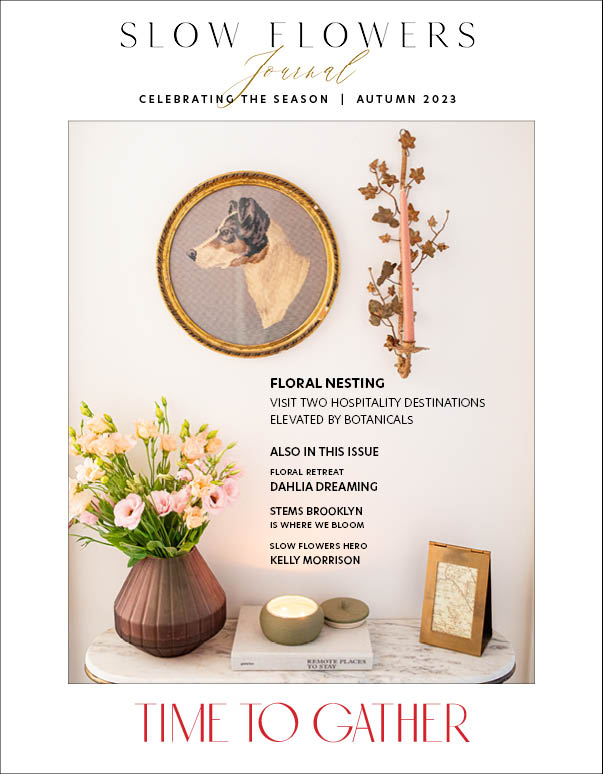
In news of the week, we have just published the Autumn 2023 issue of the Slow Flowers Journal, a beautiful 54-page digital magazine that is filled with inspiration, instruction, ideas, and news about the Slow Flowers community!
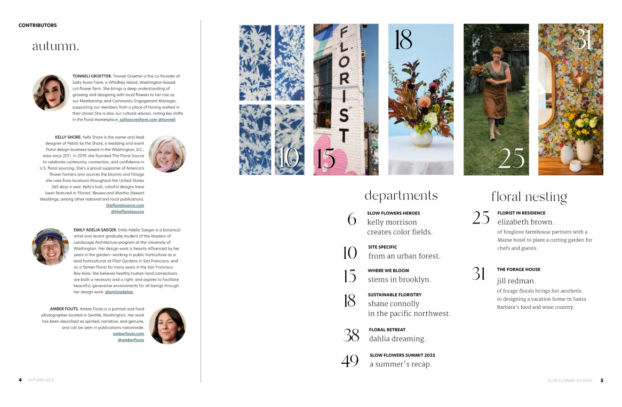
The issue settles into the coziness of the season and our stories deepen the connections between indoors and outdoors. The issue features two stories that inspire the term “Floral Hospitality.” You’ll love reading about Elizabeth Brown and Jill Redman, two Slow Flowers members who are flowering the travel, tourism, and lodging niche in creative new ways.
Meet “Slow Flowers Hero,” Kelly Morrison of Color Fields, in a profile by Tonneli Grüetter and immerse yourself in landscape architect Emily Saeger’s survey of an urban forest. We visit Stems Brooklyn as part of our Where We Bloom series and get lost in the late-season beauty of Mary Kate Kinnane’s dahlia workshop. Enjoy gorgeous floral photography in recaps of June’s Slow Flowers Summit and September’s lecture and workshops that welcomed British floral artist Shane Connolly to Seattle. We love sharing the season’s coziness in this issue of Slow Flowers Journal.
This show is brought to you by Slowflowers.com, the free, online directory to more than 750 florists, shops, and studios who design with local, seasonal and sustainable flowers and to the farms that grow those blooms. It’s the conscious choice for buying and sending flowers.
Thank you to our lead sponsor, Farmgirl Flowers. Farmgirl Flowers delivers iconic burlap-wrapped bouquets and lush, abundant arrangements to customers across the U.S., supporting U.S. flower farms by purchasing more than $10 million dollars of U.S.-grown fresh and seasonal flowers and foliage annually. Discover more at farmgirlflowers.com.
Thank you to Mayesh Wholesale Florist. Family-owned since 1978, Mayesh is the premier wedding and event supplier in the U.S. and we’re thrilled to partner with Mayesh to promote local and domestic flowers, which they source from farms large and small around the U.S. Learn more at mayesh.com.
Thank you goes to The Gardener’s Workshop, which offers a full curriculum of online education for flower farmers and farmer-florists. Online education is more important than ever, and you’ll want to check out the course offerings at thegardenersworkshop.com.
Thank you to Details Flowers Software, a platform specifically designed to help florists and designers do more and earn more. With an elegant and easy-to-use system–Details is here to improve profitability, productivity, and organization for floral businesses of all shapes and sizes. Grow your bottom line through professional proposals and confident pricing with Details’ all-in-one platform. All friends of the Slow Flowers Podcast will receive a 7-day free trial of Details Flowers Software. Learn more at detailsflowers.com.
I love all this floral goodness and I am so happy you joined me today! The Slow Flowers Podcast is a member-supported endeavor, downloaded more than one million times by listeners like you. Thank you for listening, commenting and sharing – it means so much. As our movement gains more supporters and more passionate participants who believe in the importance of our domestic cut flower industry, the momentum is contagious. I know you feel it, too. If you’re new to our weekly Show and our long-running Podcast, check out all of our resources at SlowFlowersSociety.com
Thank you for listening! Sending love, from my cutting garden to you! (c) Missy Palacol Photography
I’m Debra Prinzing, host and producer of the Slow Flowers Show & Podcast. The Slow Flowers Podcast is engineered and edited by Andrew Brenlan. The content and opinions expressed here are either mine alone or those of my guests alone, independent of any podcast sponsor or other person, company or organization. Next week, you’re invited to join me in putting more Slow Flowers on the table, one stem, one vase at a time. Thanks so much for joining us today and I’ll see you next week!
Music credits:
Shift of Currents; Drone Pine; Turning on the Lights; Gaena by Blue Dot Sessions http://www.sessions.blue